

Benefits of Bespoke Bass Guitars: A Complete 2026 Guide
Table of Contents
- What Are Bespoke Bass Guitars and Why They Matter
- Superior Tone and Sonic Characteristics
- Custom Ergonomics and Playability in Bespoke Bass Guitars
- Bespoke vs Mass-Produced Bass: Key Differences and Advantages
- Understanding the Custom Bass Guitar Build Process
- Cost of Custom Bass Guitars: Investment vs. Value
- Is a Bespoke Bass Guitar Worth It? Real-World Considerations
- Conclusion
Last Updated: July 12, 2026
What Are Bespoke Bass Guitars and Why They Matter
A bespoke bass guitar is a hand-built instrument created specifically for an individual player, incorporating custom specifications for every component from the body wood to the electronics. Unlike factory-produced instruments that follow standardized templates, bespoke basses are designed with exacting attention to the player's exact needs. The luthier, the skilled craftsperson who builds the instrument, works directly with you to understand your sonic preferences, ergonomic requirements, and aesthetic vision.
Playability and tone are deeply personal. What works perfectly for a funk session musician might be completely wrong for a jazz or metal bassist. A bespoke build eliminates the compromise that comes with buying off-the-shelf instruments.
Hand-Built vs. Factory-Made: The Craftsmanship Difference
Factory production prioritizes consistency and cost efficiency through standardized templates and assembly-line processes. A luthier-built instrument prioritizes individual expression and sonic refinement through human decision-making at every step.
Hand-building means a luthier selects tonewoods based on grain characteristics and density, hand-carves body contours to match your shape, winds pickups to exact specifications, and hand-finishes every surface. Factory machinery produces consistent instruments quickly but with no room for the subtle variations that create character and uniqueness.
The craftsmanship difference translates directly into playability. A luthier adjusts neck profile, fret crown height, and string action based on your playing style, understanding that a slap bassist needs different neck geometry than a fingerstyle player.
Superior Tone and Sonic Characteristics
The sonic characteristics of a bespoke bass emerge from dozens of interconnected decisions that a luthier makes throughout the build. Tone begins with wood selection: ash tends toward brightness and snap, mahogany delivers warmth and midrange depth, and maple adds clarity and sustain. A luthier sources specific pieces with grain characteristics that produce your desired sonic palette.
Body construction method matters equally. A custom build allows for specific body thickness, internal bracing, and finish application that optimize resonance. Some luthiers use thinner bodies for increased sustain; others prefer thicker bodies for punch and projection.
Hardware choices, bridge, tuning machines, nut material, all contribute to tonal character. The bridge transfers string vibration to the body; different designs emphasize different frequency ranges. These aren't minor details, they're core tonal variables.
Tonewoods, Pickups, and Hand-Wound Electronics
Hand-wound pickups represent one of the most significant advantages of a bespoke build because they're manufactured specifically for your instrument's body wood and hardware configuration. Factory pickups are mass-produced to general specifications; hand-wound pickups are engineered to match the resonance profile of your specific instrument.
Haynes Guitar & Bass Build specializes in hand-wound pickups optimized for your instrument's tonal characteristics. A pickup wound for a bright ash body differs from one wound for a warm mahogany body.
Electronics go beyond pickups. A bespoke build allows you to specify active or passive electronics, preamp type, EQ configuration, and wiring architecture. A luthier understands how pickup height, body mass, wood density, and electronics interact to create your final tone.
| Component | Factory Standard | Bespoke Custom |
|---|---|---|
| Pickup winding | Mass-produced to general spec | Hand-wound for your instrument |
| Electronics | Pre-designed circuit | Custom configured to your needs |
| Hardware selection | Cost-optimized standard parts | Chosen for tonal optimization |
| Assembly | CNC and assembly line | Hand-assembled with adjustments |
| Testing | Batch quality control | Individual instrument evaluation |
Custom Ergonomics and Playability in Bespoke Bass Guitars
Every player has different hand size, finger strength, playing technique, and comfort preferences. A factory instrument must choose one neck profile, scale length, and body shape. A custom build is literally shaped around your body and hands.
The neck profile can be tailored to your grip preference, thinner for fast playing, thicker for support, or asymmetrical if one side needs different geometry. Body contours can be carved to fit your torso, reducing fatigue and improving fret access. A neck that doesn't match your hand geometry creates tension and limits speed; a body that doesn't fit causes shoulder strain during long sessions.
The fretboard itself can be customized. Radius (the curve across the fretboard) affects how your fingers sit and move. Fret size influences playability and tone. Some players want minimal frets for open feel; others want frets extending to the body for extended range.
Scale Length, Neck Profile, and Fretboard Customization
Scale length, the distance from the nut to the bridge, fundamentally affects both tone and playability. Standard bass guitars typically use 34-inch scale, but shorter scales (32 inches or less) reduce string tension and produce warmer tone, while longer scales (35-36 inches) increase tension and produce brighter tone.
A bespoke build lets you choose the exact scale length matching your hands and tonal preferences. Neck profile customization extends to the front-to-back shape: a thin C-profile suits fast playing, a thicker D-profile offers support for fingerstyle work, and an asymmetrical profile accommodates different hand positions.
Fretboard radius affects how your fingers interact during bends and vibrato. A flatter radius (12-16 inches) suits modern playing; a tighter radius (7-9 inches) suits vintage-style playing. Some custom builds use compound radius, tighter at the nut and flatter at the body, to optimize playability across the entire neck.
Bespoke vs Mass-Produced Bass: Key Differences and Advantages
A factory bass is optimized for manufacturing efficiency and broad market appeal. A bespoke bass is optimized for one specific player. Tone customization in a bespoke build means every component is selected and integrated for your sonic preferences. Playability in a custom build is tailored to your hands and technique.
Quality control represents another significant difference. A factory instrument receives batch testing; a bespoke instrument receives individual evaluation. Your luthier plays every instrument they build, evaluates its tone and playability, and makes adjustments before it ships.
Build time is longer for bespoke instruments, typically 6-12 months, but this timeline reflects genuine craftsmanship. The investment is higher, but this reflects skilled labor, premium materials, and customization that's impossible at factory prices.
Quality Control and Exacting Details
When a luthier builds an instrument, quality control is continuous throughout the build. Every component is inspected before installation, every joint is checked for fit, and every electronic connection is tested. The frets are crowned and polished to exacting standards.
This level of attention is economically impossible in factory production. A factory inspects a percentage of units; a luthier inspects every unit they build. A hand-finished instrument feels smoother and more refined than a factory finish. Hardware fit represents another area where bespoke builds excel: every screw hole is drilled to exact specifications with no gaps or misalignment.
Understanding the Custom Bass Guitar Build Process
The commissioning process begins with consultation. You discuss your playing style, sonic preferences, ergonomic needs, and aesthetic vision. Your luthier asks detailed questions about your hands, technique, genres you play, and desired tonal character.
Next comes design and material selection. Your luthier proposes specific tonewoods, hardware, and electronics based on your preferences. Once you've agreed on specifications, the luthier sources materials, selecting specific pieces of wood and ordering custom electronics.
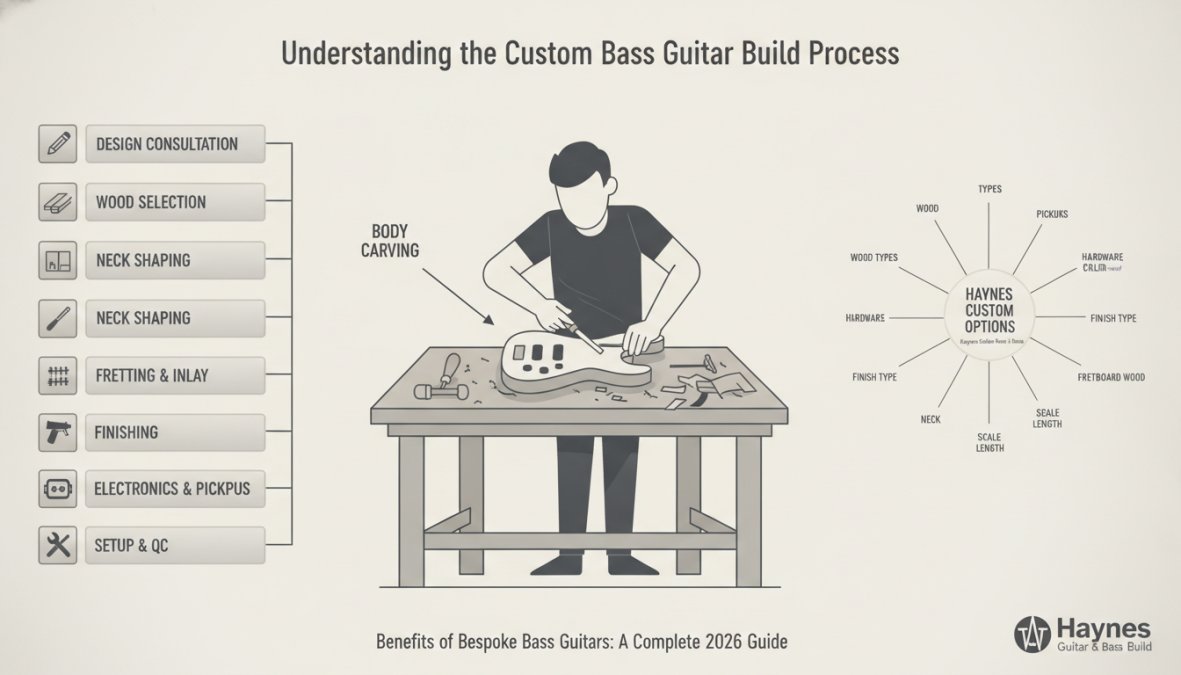
The actual build begins with body construction. The luthier mills the body from solid tonewood, hand-carves contours, routes cavities for electronics, and drills hardware holes. The neck is constructed similarly, with the fretboard glued on and frets carefully installed and crowned.
Electronics assembly comes next. Your luthier hand-winds your pickups to specification, assembles the preamp circuit, and installs all wiring. Assembly brings all components together, with the luthier playing the instrument extensively and making micro-adjustments to pickup height, bridge setup, and action.
Finally comes finishing. The instrument receives multiple coats of finish with sanding between coats. The frets are crowned and polished, strings are installed, and the instrument is set up to your exact preferences.
Working with a Luthier and Managing Build Time
Selecting the right luthier is as important as the build specifications themselves. Research potential luthiers carefully, look at their past work, read reviews, and schedule consultations before committing.
Communication during the build should be regular but not intrusive. Most luthiers provide progress updates at key milestones. Build time typically ranges from 6-12 months, depending on the luthier's workload and specification complexity. This timeline isn't a limitation, it's the reality of genuine craftsmanship.
Cost of Custom Bass Guitars: Investment vs. Value
The price of a bespoke bass guitar typically ranges from £1,500 to £4,000 or more, depending on the luthier's reputation, material choices, and specification complexity. This is significantly higher than factory instruments, which range from £300 to £1,200.
The cost difference reflects genuine value creation. You're paying for skilled labor, premium materials sourced specifically for your instrument, and customization that's impossible at factory prices. Materials typically account for 20-30% of the price; labor accounts for 50-60%; overhead and profit account for the remainder.
A bespoke bass will outlast multiple factory instruments. A well-built custom bass can last decades with proper maintenance, while factory instruments often need component replacement within 5-10 years.
Pricing, Resale Value, and Long-Term Collectibility
While bespoke bass guitars cost more upfront, their resale value can offset the initial investment. A well-built custom bass from a respected luthier often retains 60-75% of its original value on the used market, compared to 40-50% for factory instruments.
Bespoke instruments are unique, and collectors actively seek out custom builds from respected luthiers. Collectibility increases over time as a luthier's reputation grows; an instrument built by a now-famous luthier 15 years ago might be worth significantly more than its original price.
The used custom market is strong and growing. A well-maintained custom bass appreciates in value over time, creating an incentive to care for your instrument properly.
Is a Bespoke Bass Guitar Worth It? Real-World Considerations
Whether a bespoke bass guitar is worth the investment depends on your playing level and goals. For professional musicians who perform regularly, a custom bass is almost always worth the investment. For serious amateurs who play multiple times per week with specific sonic and ergonomic requirements, a bespoke build usually makes sense.
For casual players who play occasionally, a quality factory instrument might be more practical. The decision also depends on whether you know exactly what you want. If you have clear preferences about scale length, neck profile, tonewoods, and electronics, you're ready for a bespoke build.
| Consideration | Bespoke Build Makes Sense | Factory Instrument Better |
|---|---|---|
| Playing frequency | 3+ times per week | Occasional or learning |
| Tone preferences | Specific and clear | Still exploring |
| Ergonomic needs | Specific requirements | Average hand size |
| Budget | £1,500+ available | £500-1,200 range |
| Build time | Can wait 6-12 months | Need instrument immediately |
| Long-term commitment | Planning to keep for years | Might upgrade later |
When Custom Builds Make Sense and When They Don't
Custom builds make sense when you have specific requirements that factory instruments don't address. If you need a short-scale bass for smaller hands or want specific tonewoods or electronics unavailable in production models, bespoke is the answer.
Professional musicians benefit most from custom builds. The improved playability and tone directly impact performance quality. Players with specific ergonomic needs, unusual hand size, or physical limitations find that bespoke builds dramatically improve their playing experience.
Custom builds don't make sense if you're still developing your preferences. Spend time with various factory instruments first, identify your preferences, then commission a custom bass. They also don't make sense if budget is tight; a quality factory instrument is a better investment than stretching financially for a custom bass.
The decision to invest in a bespoke bass guitar comes down to whether you're ready to optimize every aspect of your instrument around your specific playing style, sonic preferences, and ergonomic needs. If you've developed clear preferences through playing experience and can commit to the 6-12 month build timeline, a custom build from a skilled luthier like Haynes Guitar & Bass Build delivers unmatched value. Their hand-built instruments, including options like the Custom Five String Haynes Jazz Bass at £2,100, feature hand-wound pickups, custom bodies and necks, and specifications tailored to your exact requirements. For serious players, this level of customization transforms your playing experience in ways that factory instruments simply cannot match.
Frequently Asked Questions
What are the main benefits of bespoke bass guitars compared to mass-produced instruments?
Bespoke bass guitars offer superior tone through carefully selected tonewoods and hand-wound pickups, custom ergonomics tailored to your playing style, and meticulous craftsmanship that factory-made instruments cannot match. A luthier builds each instrument to your exact specifications, ensuring playability and sonic characteristics suit your needs. You also gain the investment value and collectibility of a hand-built, bespoke instrument that holds its value better than mass-produced alternatives.
How long does the custom bass guitar build process typically take?
The custom bass guitar build process varies depending on the luthier's waitlist and complexity of your specifications. Most bespoke builds take 8-16 weeks from commissioning to completion. Factors affecting build time include tonewoods selection, custom inlay work, preamp installation, and the luthier's current workload. Working directly with your luthier during the commissioning process helps establish realistic timelines and manage expectations throughout the build.
Do bespoke bass guitars hold their value and remain collectible?
Yes, well-crafted bespoke bass guitars generally hold their value better than mass-produced instruments, especially if built by respected luthiers. Hand-built instruments gain collectibility over time, particularly if they feature unique customization, rare tonewoods, or signature hardware from brands like Nordstrand or Aguilar. The used custom bass market shows strong demand for quality instruments, making bespoke builds a viable long-term investment for serious players and collectors.
What can you customize on a bespoke bass guitar?
Bespoke bass guitars offer extensive customization options: scale length (short scale or long scale), body and neck wood selection, fretboard material, neck profile, hardware choices, pickup configuration, preamp electronics, custom inlay designs, headstock styling, and finish options. A skilled luthier will guide you through these decisions to optimize both playability and sonic characteristics. This level of customization ensures the instrument matches your exact ergonomic needs and tonal preferences.
Is a custom bass guitar worth the investment?
A bespoke bass guitar is worth the investment if you're a serious player seeking superior tone, custom ergonomics, and long-term value. The higher upfront cost reflects hand-built craftsmanship, premium tonewoods, and hand-wound pickups that mass-produced instruments cannot deliver. Consider your skill level, playing style, and budget: professional and semi-professional musicians typically see strong ROI, while beginners may benefit more from quality mass-produced options first.
This article was written using GrandRanker