

Bespoke Guitar Build Wait Times: A 2026 Guide
Table of Contents
- Understanding Bespoke Guitar Build Wait Times
- Key Factors Influencing Custom Guitar Build Duration
- Custom Guitar Lead Times: Builder vs. Production Models
- What to Ask a Luthier Before Ordering Your Build
- Custom Guitar Build Process Stages and Timeline Expectations
- Managing Expectations for Bespoke Guitar Orders
- Builder Transparency Index and Lead Time Variance
- Conclusion
Last Updated: July 6, 2026
Understanding Bespoke Guitar Build Wait Times
When you order a bespoke guitar build, the first question is simple: how long will I actually wait? Bespoke guitar build wait times vary dramatically depending on the builder, your specifications, and current market conditions. Understanding what influences these lead times is essential before committing to a custom order.
Since the pandemic disrupted supply chains and shifted consumer demand, the guitar industry has fundamentally changed. What once took 6-8 months for a hand-built instrument now often stretches to 12-18 months or longer at top-tier builders.
Why Lead Times Vary Between Builders
The difference between a 6-month wait and an 18-month wait often comes down to how a builder structures their business model. A master-built approach, where a single luthier handles every stage from raw wood to final setup, typically means longer individual wait times but potentially higher perceived value. Team-built operations distribute work across multiple craftspeople, which can theoretically accelerate timelines, but coordination becomes critical, if one stage bottlenecks, the entire build stalls.
Post-pandemic expectations have shifted. Customers are now more tolerant of longer lead times when builders communicate transparently about projected timelines and build status. The worst scenario isn't a long wait, it's uncertainty about when your guitar will actually arrive.
Key Factors Influencing Custom Guitar Build Duration
Production Capacity and Backlog Management
The single biggest factor determining your wait time is how many orders a builder currently has in their queue. A builder accepting 12 new orders per year has a fundamentally different capacity profile than one accepting 30. Backlog management separates reliable builders from those who overpromise.
Wood Sourcing and Supply Chain Constraints
Custom guitar builds depend on quality tone wood, figured maple, exotic rosewood, premium spruce. Sourcing these materials has become increasingly challenging since 2024. Many builders now maintain wood inventory to buffer against delays, but this adds cost and requires significant capital investment.
CITES regulations on endangered wood species have also added complexity. Certain exotic tonewoods now require documentation and import permits that can delay material arrival by weeks or months.
Custom Specifications and Complexity
A straightforward build with standard body shape and conventional pickup configuration moves faster than a truly bespoke instrument with multiple custom features. A custom body shape requires pattern development and routing setup. Hand-wound pickups add weeks compared to using stock components. A complex finish schedule with multiple color layers and hand-applied details can add 4-8 weeks to the timeline.
The spec sheet approval process also matters. If you request multiple revisions before the builder begins work, that delays the entire build. Clear, decisive specs from the start keep the project moving.
Finish Schedule and Paint Process Impact
The finish is often the longest single stage in a custom guitar build. A simple solid color takes 2-3 weeks. A complex multi-layer finish with hand-applied details can take 6-8 weeks or longer, including application, curing time between coats, sanding, buffing, and final quality inspection.
Hand-applied finishes, particularly those attempting vintage aesthetics or custom artwork, require time for the paint or stain to cure properly between applications. Nitrocellulose lacquer, favored by many boutique builders for its tone and aging characteristics, requires extended curing time compared to modern polyurethane, adding 3-4 weeks to a build.
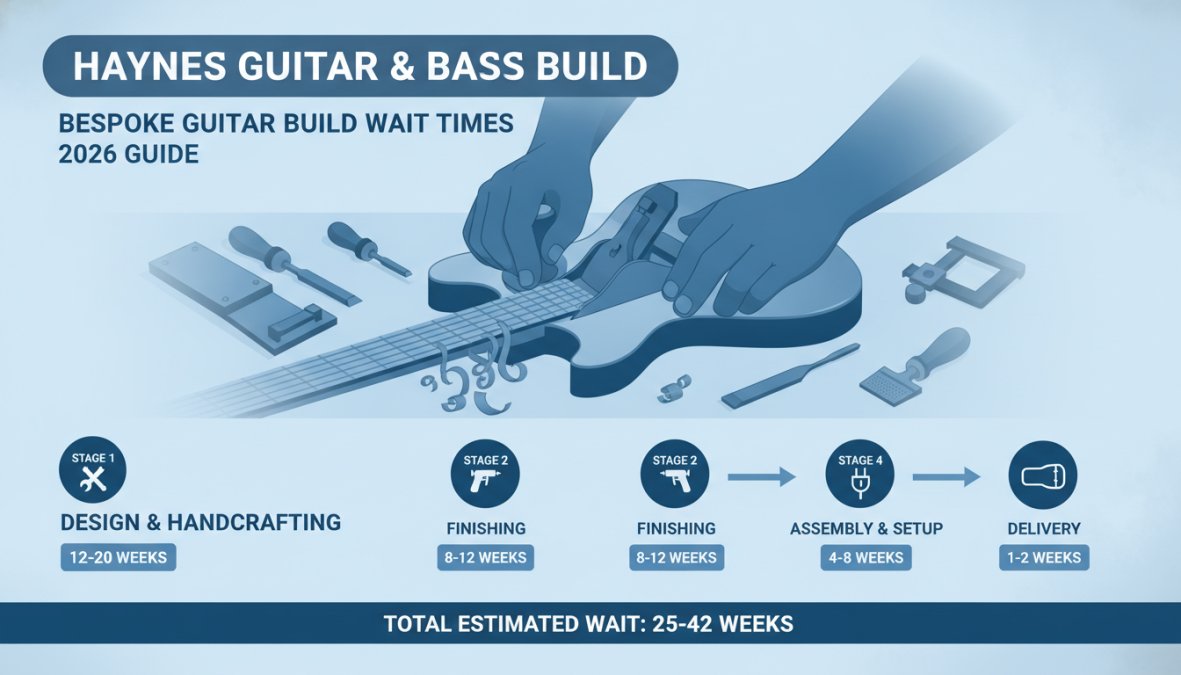
Custom Guitar Lead Times: Builder vs. Production Models
Hand-Crafted and Master-Built Timelines
A true master-built guitar, where one experienced luthier handles the entire build from wood selection through final setup, typically takes 3-6 months from order submission to completion. However, the actual wait from order placement to build start can be 6-18 months depending on the builder's reputation and current backlog.
Master builders command longer lead times because their reputation precedes them. The advantage of this model is consistency and accountability. One person owns every aspect of your build. The disadvantage is that any illness, personal circumstances, or unexpected delay affects your delivery window.
Team-Built vs. Single-Luthier Approaches
Team-built operations distribute build stages across multiple craftspeople, which can theoretically accelerate production. A well-managed team-built shop can deliver custom orders in 4-5 months of actual build time, with lead times of 8-12 months from order to completion. The trade-off is that quality assurance becomes more complex.
Single-luthier operations are often slower in absolute terms but more consistent. There's no hand-off risk, no quality variance between stages.
What to Ask a Luthier Before Ordering Your Build
Critical Questions About Build Status Tracking and Delivery Window
Before committing your deposit, ask these specific questions:
-
"What is your current lead time, and when would my build actually start?" This separates promised timeline from actual build start date.
-
"How do you communicate build progress?" Reliable builders provide regular updates, monthly photos, milestone notifications, or an online portal showing build status.
-
"What happens if you need to adjust the timeline?" Ask how they handle unexpected delays and whether they notify you immediately.
-
"Have you ever missed a delivery window, and if so, by how much?" Honest builders will admit occasional delays and explain what caused them.
-
"Can I see a timeline breakdown showing each build stage?" This reveals whether the builder has thought through their process.
Understanding Deposit Terms and Legal Protection
Always clarify the financial and legal terms before depositing money. A reputable builder provides a written contract addressing deposit refundability, payment schedule, exact specifications, timeline, and completion criteria. Your deposit should ensure clarity before handing over money.
The Rush Fee Reality and Expedited Options
Some builders offer expedited builds for an additional fee, sometimes 20-50% markup on the base price. Legitimate rush options exist when a builder has capacity. If they're currently taking orders with a 6-month lead time, they might accept a rush order at premium pricing and deliver it in 3-4 months.
Be skeptical of rush fees that seem designed purely to extract extra money. The builder should explain specifically how the rush affects their production schedule.
Custom Guitar Build Process Stages and Timeline Expectations
Order Submission to Spec Sheet Approval
The first stage begins when you place your order and submit your specifications. If your spec sheet is incomplete or contains conflicting requirements, the builder will request clarification. This back-and-forth can take 1-2 weeks if you're responsive. Once the spec sheet is approved, the builder typically requests your deposit, confirming your commitment.
Component Selection and Wood Sourcing Phase
After spec approval, the builder begins sourcing materials. If you've specified standard components, this is quick. Custom components require additional lead time. Hand-wound pickups might take 4-6 weeks if the builder winds them in-house. Wood sourcing happens in parallel, typically taking 2-4 weeks for standard builds, longer for exotic materials.
Build Execution, Quality Assurance, and Final Inspection
Once materials are assembled, the actual build begins. A master builder working methodically might take 6-8 weeks on a complex build. A team-built operation might compress this to 4-5 weeks through parallel work. Quality assurance happens continuously, with final inspection before shipping taking 1-2 weeks for a thorough job.
Managing Expectations for Bespoke Guitar Orders
Communication with Dealers vs. Direct Builders
Ordering through a dealer introduces an intermediary, which can slow communication. Direct ordering with a builder cuts out the middleman, typically meaning faster responses and clearer information. However, dealers sometimes have closer relationships with builders and might secure better lead times.
Monitoring Build Progress and Handling Delays
Once your build is underway, regular communication keeps expectations aligned. Builders who provide monthly updates or photos help you feel connected to the process. If a delay occurs, the builder's response matters more than the delay itself. Immediate notification, a clear explanation, and a revised timeline show professionalism.
Realistic Projected Timelines vs. Optimistic Estimates
Current market conditions as of 2026 suggest these realistic timelines:
Standard Custom Build: 8-12 months total lead time, 4-5 months actual build time
Complex Custom Build: 12-18 months total lead time, 6-8 months actual build time
Master-Built by Renowned Luthier: 18-24+ months total lead time, 3-6 months actual build time once started
Team-Built Production Model: 6-10 months total lead time, 3-4 months actual build time
If a builder quotes significantly shorter timelines, ask why. Genuine capacity advantages are rare.
Builder Transparency Index and Lead Time Variance
How to Evaluate Builder Reliability and Communication
A builder's transparency directly predicts their reliability. Positive indicators include clearly stated current lead times on their website, recent photos of completed builds with dates, detailed timeline breakdowns, documented processes for communicating delays, customer reviews mentioning whether timelines were met, and written contracts specifying completion dates.
Red flags include vague lead times, no recent photos of completed builds, customer reports of long waits without communication, no written contract, defensiveness about timeline questions, and lead times significantly shorter than competitors without explanation.
Haynes Guitar & Bass Build maintains transparent communication about build timelines, providing customers with regular updates and clear milestones throughout the custom order process.
Component-Based Lead Times and Modular Build Strategies
Some builders use a modular approach where different components have different lead times. The body might be completed in 6 weeks while hand-wound pickups take 8 weeks. The builder coordinates these components to arrive simultaneously, then assembles the complete instrument. This approach can reduce overall lead time compared to sequential building.
| Build Stage | Typical Duration | Variability | Impact on Lead Time |
|---|---|---|---|
| Spec approval & deposit | 1-2 weeks | Low | Minimal |
| Material sourcing | 2-4 weeks | High | Significant if exotic wood ordered |
| Body shaping & construction | 3-4 weeks | Medium | Varies by complexity |
| Electronics & pickup installation | 1-2 weeks | Low | Minimal unless hand-wound |
| Finish application & curing | 4-8 weeks | Very High | Major factor in total timeline |
| Quality assurance & setup | 1-2 weeks | Low | Minimal |
| Shipping & delivery | 3-7 days | Medium | Minor unless international |
Waiting for a bespoke guitar is part of the experience, building anticipation and ensuring you receive an instrument crafted specifically for your needs. The key is choosing a builder who respects your time and communicates transparently about the timeline. Haynes Guitar & Bass Build specializes in hand-built, made-to-order instruments with clear communication throughout the build process, ensuring you know exactly when your custom guitar will arrive.
Frequently Asked Questions
Why do bespoke guitar build wait times typically range from several months to over a year?
Bespoke guitar builds require careful wood sourcing, hand-crafted assembly, and quality assurance processes that cannot be rushed. Lead times depend on the builder's production capacity, current backlog, custom specifications complexity, and finish schedule. Hand-wound pickups, custom bodies, and necks built to exact specifications demand meticulous attention. Most UK luthiers balance multiple projects to maintain quality, which extends the overall delivery window compared to production models.
What questions should I ask a luthier before ordering to understand the actual lead time?
Ask about current backlog and estimated order submission to completion date. Request clarity on the build process stages, wood sourcing, assembly, finish, quality assurance, and final inspection timelines. Inquire about build status communication frequency and whether rush fees apply. Confirm deposit terms, cancellation policies, and legal protections. Ask if custom specifications (body wood, neck profile, pickup configuration) affect the projected timeline. Understanding these factors helps set realistic expectations and protects your investment.
How do custom guitar lead times differ between hand-crafted and team-built approaches?
Hand-crafted, master-built guitars by a single luthier often have longer lead times due to one person managing the entire build process, but offer greater consistency in tone and craftsmanship. Team-built approaches distribute work across specialists, one handling bodies, another necks, another finish, potentially reducing lead time variance. However, coordination between team members can introduce delays. Production capacity and current backlog ultimately matter more than the approach; a busy master-builder may have longer wait times than an efficient team.
What protections should I consider when placing a bespoke guitar custom order?
Ensure your deposit terms and contract clearly outline the estimated delivery window, quality assurance standards, and final inspection criteria. Understand cancellation policies and refund conditions. Request regular build status updates and communication milestones. Confirm the builder's liability if the instrument fails quality checks or delivery is significantly delayed. Some builders offer rush fees for expedited timelines, but verify these actually reduce lead time rather than simply charging extra. Always get written confirmation of custom specifications and completion date expectations.
This article was written using GrandRanker