

Best Pickups for Vintage Tone: UK Guide 2026
Table of Contents
- What Defines a Vintage Tone in Guitar Pickups
- Alnico Magnets: Types II, III, and V Explained
- Single-Coil vs Humbucker: Vintage Tone Differences
- Best Pickups for Vintage Tone: Hand-Wound Options
- Best Pickups for 50s vs 60s Vintage Stratocaster Tone
- Vintage Specs vs Modern Reliability: What You Gain and Lose
- Pickup Installation and Setup in the UK
- Blind A/B Comparison: Testing Vintage Pickups Objectively
Last Updated: July 29, 2026
Finding the best pickups for vintage tone requires understanding how magnets, wire composition, and winding tension combine to shape sound. At Haynes Guitar & Bass Build, we hand-wind pickups that capture the warmth, clarity, and dynamic response of 1950s and 1960s instruments. Whether restoring a vintage Stratocaster or building a partscaster, the pickup you choose defines how your guitar responds to your playing.
The challenge isn't just finding pickups that sound "vintage", it's finding ones that deliver specific tone without sacrificing reliability. Modern hand-wound pickups solve the problems of vintage-spec pickups (microphonic feedback, inconsistent output, thin tone under high gain) while preserving the character that made original instruments legendary.
What Defines a Vintage Tone in Guitar Pickups
Vintage tone emerged from 1950s and 1960s manufacturing constraints: Alnico magnets, hand-winding, and less precise control over coil tension and wire gauge. These created a sonic signature: bell-like chime in treble, warmth in midrange, and natural breakup that responds to pick attack.
Alnico magnet type is fundamental. Alnico II produces soft, warm lows with rolled-off highs. Alnico III delivers raw power and articulation. Alnico V offers focused clarity and enhanced sustain. Most 1950s pickups used Alnico II or III.
DC resistance matters significantly. A 1950s Stratocaster neck pickup typically measured 5.5k to 6.0k ohms, preserving string clarity while delivering warmth. Bridge pickups ran 6.5k to 7.5k ohms. Modern "vintage" pickups exceeding 7.5k in the neck position won't sound like vintage pickups, they'll sound overwound. Output level directly affects how your guitar interacts with your amplifier's input stage.
Wax potting and enamel coating prevent microphonic feedback. Vintage pickups were often potted lightly or not at all, creating airy sound but prone to feedback at stage volumes. Modern hand-wound vintage pickups balance this: conservative potting maintains openness while controlling feedback for live performance.
Alnico Magnets: Types II, III, and V Explained
Understanding the three main Alnico types is essential for choosing the right vintage tone.
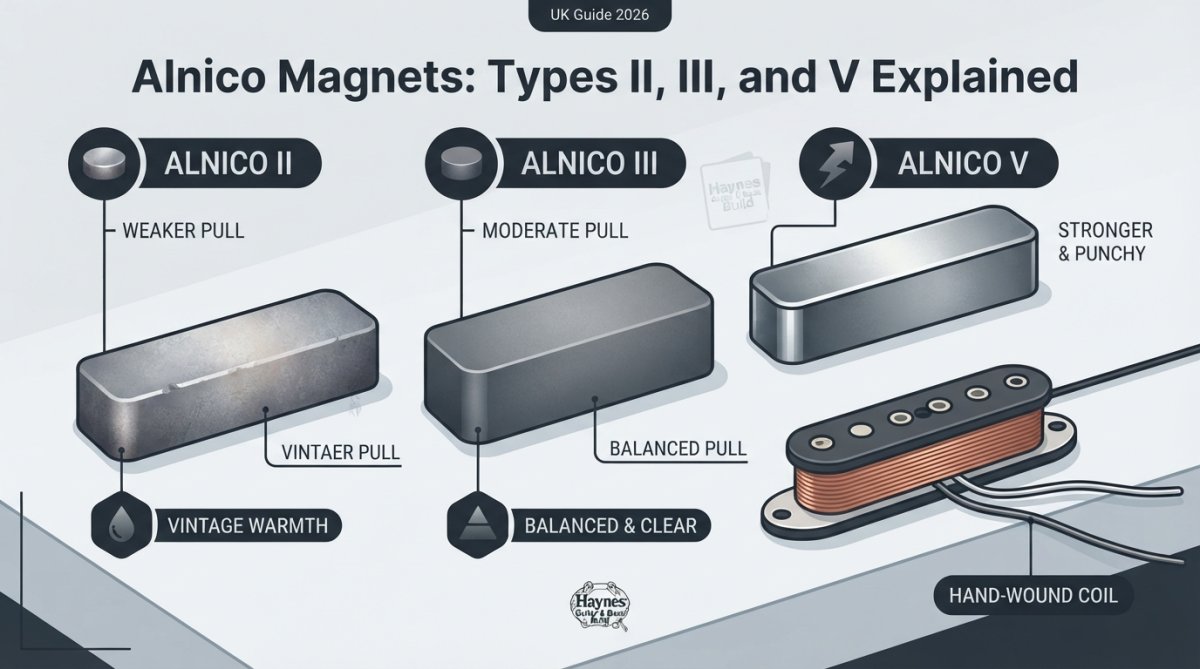
Alnico II: Soft Warmth and Bell-Like Chime
Alnico II magnets produce the warmest, most mellow tone. The softer magnetic field means the pickup responds gently to string vibration, creating a compressed, glassy quality in treble. Neck pickups sound like they're wrapping strings in silk. Bridge pickups deliver a singing, vocal quality perfect for blues and classic rock.
The trade-off is output. Alnico II pickups typically measure 6.0k to 6.5k ohms, lower than Alnico V. They won't cut through dense mixes easily and require more amp gain to reach saturation. For bedroom and studio work, this is ideal.
Alnico III: Raw Power and Articulation
Alnico III sits between Alnico II and V in warmth and brightness. They deliver articulation, individual string definition, without losing midrange warmth. Early 1950s Telecasters used Alnico III, which is why they sound punchy and clear.
Alnico III pickups typically measure 6.5k to 7.2k ohms. This output level suits players wanting vintage tone with enough signal to cut through a band mix.
Alnico V: Focused Clarity and Dynamic Response
Alnico V magnets are the strongest, producing a tighter magnetic field that responds more directly to string vibration with less compression. This creates clarity and definition, especially in treble and upper midrange. Alnico V was used in some vintage pickups, particularly 1960s Fender models. Alnico V pickups typically measure 7.5k to 8.5k ohms, delivering plenty of output without needing a hotter coil wind.
Single-Coil vs Humbucker: Vintage Tone Differences
Single-coil and humbucker designs fundamentally shape vintage tone.
Single-Coil Brightness and Hum Characteristics
Single-coil pickups like vintage Stratocasters and Telecasters have one magnet and one coil, creating bright, clear tone with pronounced treble and scooped midrange. The open magnetic field means the pickup responds directly to string vibration with minimal compression.
The drawback is noise. Single-coils pick up electromagnetic interference from power supplies and lights. Vintage single-coils are unshielded, humming more than modern alternatives. Staggered pole pieces, where magnet poles are at different heights to match string spacing, are hallmark of vintage single-coils and balance volume across all six strings.
Humbucker Warmth and Hum-Canceling Benefits
Humbuckers use two coils wound in opposite directions, canceling electromagnetic hum while preserving string signal. This produces warmer, thicker tone than single-coils, more midrange, less treble sparkle, more sustain. Vintage humbuckers from the 1950s (PAF pickups) are prized for woody, articulate sound.
The trade-off is brightness. Humbuckers are naturally darker than single-coils. For blues, classic rock, and jazz, this warmth is perfect. For surf rock and twangy country, you need single-coils. Modern hum-canceling single-coils exist, stacked coils that suppress hum while maintaining single-coil tone, offering a compromise for gigging musicians.
Best Pickups for Vintage Tone: Hand-Wound Options
The best pickups for vintage tone are hand-wound, not machine-wound. Hand-winding allows tighter control over coil tension, wire spacing, and magnet interaction, with each pickup individually voiced rather than stamped to specification.
Haynes Golden Root 1957 Stratocaster Pickups
The Haynes Golden Root 1957 Stratocaster pickup set at £89.00 captures early 1950s Fender Stratocaster tone. These use Alnico II magnets, formvar-coated wire, and hand-wound vintage specifications. The neck pickup measures 5.8k ohms, middle 5.9k, bridge 6.3k, precisely matching original 1950s instruments.
Haynes hand-winds each coil with controlled tension, so wire sits consistently without gaps or loose spots. This produces clearer, more articulate tone than pickups wound too tightly or too loosely. The result is warm, glassy tone without sacrificing string definition. The 1957 set excels for players chasing bell-like chime and natural breakup.
Haynes Golden Root 1963 Stratocaster Pickups
The Haynes Golden Root 1963 Stratocaster pickup set at £89.00 shifts toward brighter, more articulate mid-1960s tone. These use Alnico V magnets and measure 6.2k (neck), 6.3k (middle), 7.1k (bridge) ohms. Higher output and stronger magnetic field create more clarity and sustain than the 1957 set.
The 1963 pickups deliver more modern vintage tone, still warm and musical but with more upper midrange presence. They're ideal for players wanting vintage character with enough output to cut through a band mix. Both Haynes sets are hand-wound in the UK using period-correct materials: formvar wire, vintage-style bobbins, and carefully selected Alnico magnets.
Fender Custom Shop and Pure Vintage Options
Fender's Pure Vintage '65 Stratocaster Pickup Set at £187.00 is a factory-made alternative to hand-wound options. These use Alnico V magnets, enamel-coated wire, and staggered pole pieces. Wax potting reduces microphonic feedback compared to true vintage pickups. For players wanting authentic vintage tone without noise and reliability concerns of original 1960s pickups, Pure Vintage is a solid choice.
Factory-made pickups can't match individual voicing of hand-wound alternatives. Each Haynes pickup is voiced by hand; each Fender is measured against specification.
Seymour Duncan Vintage-Voiced Humbuckers
The Seymour Duncan Antiquity Humbucker Set at £388.00 targets players chasing 1950s PAF tone. These use Alnico II bar magnets, unpotted coils, and hand-signed baseplates. The neck pickup measures 7.7k ohms; bridge 8.6k ohms. Unpotted design means these pickups are more prone to microphonic feedback but deliver airy, open sound that potted pickups can't match.
The Antiquity set is a genuine recreation of vintage PAF tone, warm, articulate, with woody midrange responding beautifully to pick dynamics. For humbucker players serious about vintage tone, this is the benchmark.
Lollar and Bare Knuckle UK-Made Alternatives
Lollar Vintage Blonde Strat Pickup Set at £291.00 is hand-wound in Seattle and known for exceptional clarity and scooped midrange. These use Alnico V magnets and deliver bright, articulate tone ideal for players wanting vintage character with modern clarity.
Bare Knuckle '50s Broadcaster Tele Pickup Set at £229.00 is hand-wound in the UK and targets early 1950s Telecaster tone. The neck uses Alnico V; bridge uses Alnico III. These are aggressive pickups for players wanting bite and definition.
Best Pickups for 50s vs 60s Vintage Stratocaster Tone
The decade matters enormously when chasing vintage Stratocaster tone. Early 1950s and mid-1960s instruments sound distinctly different.
1950s Broadcaster and Early Strat Character
Early 1950s Stratocasters and Telecasters used Alnico II or III magnets with lower output, typically 5.5k to 6.5k ohms. The tone is warm, compressed, and bell-like. String clarity is present, but the pickup emphasizes the fundamental note and natural sustain rather than treble.
The neck pickup is remarkably warm, almost humbucker-like in compression and midrange emphasis. The bridge pickup is brighter but still warm, with natural breakup responding to pick attack. For 1950s-spec instruments, choose pickups with Alnico II magnets and output in the 5.8k to 6.5k range.
1960s Strat Warmth and Glassy Highs
Mid-1960s Stratocasters shifted toward Alnico V magnets and slightly higher output, 6.2k to 7.2k ohms. This produced brighter, more articulate tone while maintaining warmth. Glassy highs defining 1960s Strat tone come from Alnico V's tighter magnetic field, not increased treble emphasis.
The 1960s neck pickup is still warm but less compressed than 1950s versions. You hear more string definition and fundamental note. The bridge pickup is noticeably brighter, more presence, cut, and sustain. The Haynes Golden Root 1963 set or Fender Pure Vintage '65 set will deliver 1960s Strat tone.
Vintage Specs vs Modern Reliability: What You Gain and Lose
Choosing vintage-spec pickups means accepting trade-offs. Vintage pickups sound great but can be noisy, inconsistent, and microphonic. Modern pickups offer reliability but sometimes sacrifice character.
Wax Potting, Enamel Coating, and Microphonic Control
Wax potting involves dipping a finished pickup coil in hot wax, filling gaps in the winding and reducing vibration. This prevents microphonic feedback, squealing when the coil vibrates sympathetically with strings. True vintage pickups were often potted lightly or not at all, making them prone to feedback at high volumes.
Modern hand-wound vintage pickups like Haynes use conservative potting: just enough wax to control feedback without deadening the open, airy tone that makes vintage pickups sound great. Formvar enamel coating on magnet wire, used on vintage pickups, is thinner than modern polyurethane enamel and sounds slightly brighter and more articulate.
Formvar Wire and Winding Tension Impact
Formvar-coated wire is slightly thinner than modern polyurethane-coated wire, meaning a vintage-spec coil uses more wire to reach the same DC resistance. More wire means more capacitance, slightly reducing treble response and adding warmth.
Winding tension, how tightly wire is wound around the bobbin, directly affects tone. Loose winding produces airy, open sound but risks microphonic feedback. Tight winding reduces feedback but can sound compressed and dull. Hand-winding allows controlled, consistent tension; machine-winding sometimes produces inconsistent results.
Pickup Installation and Setup in the UK
Installing new pickups is straightforward, but setup, adjustments made after installation, determines whether they sound great or disappointing.
Pickup Height Adjustment for Optimal Vintage Tone
Pickup height, the distance between pickup and strings, has enormous impact on tone. Too close, and the magnetic field becomes too strong, choking sustain and creating uneven response. Too far, and output drops, making tone thin and weak.
The standard starting point is 2.4mm on the treble side (high E string) and 2.0mm on the bass side (low E string) for single-coil pickups. For humbuckers, start at 2.4mm on both sides. These measurements are taken from the top of the pickup to the bottom of the string at the 12th fret (with the string held down at the last fret).
After installation, play and listen. If tone sounds thin or output is weak, lower the pickup slightly, move it closer by 0.5mm. If tone sounds choked or sustain is reduced, raise it slightly. The sweet spot is usually within a 1mm range.
Potentiometer and Tone Capacitor Selection
The potentiometer and tone capacitor shape how your pickups interact with your amplifier. A 250k pot with a 0.022µF capacitor will sound dramatically different than a 500k pot with a 0.1µF cap, even with identical pickups.
Lower resistance (250k) pots roll off treble more aggressively, producing warmer, darker tone. Higher resistance (500k) pots preserve more treble, producing brighter tone. Single-coil pickups typically use 250k pots; humbuckers use 500k. The tone capacitor determines how much treble the tone control removes. A 0.022µF capacitor removes less treble (brighter tone control); a 0.1µF capacitor removes more treble (darker tone control).
If retrofitting a modern guitar with vintage pickups, check current pots and caps. If the guitar has 500k pots and a 0.022µF cap, your vintage pickups will sound brighter than they should. Swapping to 250k pots and a 0.047µF cap will push tone toward authentic vintage character.
Magnet Polarity and Staggered Pole Pieces
Magnet polarity, whether the north or south pole faces the strings, affects how the pickup responds to string vibration. If replacing one pickup in a set and tone suddenly changes, polarity mismatch might be the culprit.
Staggered pole pieces are hallmark of vintage single-coil design. Treble-side pole pieces are taller than bass-side pieces, balancing output across six strings. When installing staggered pole pieces, tall poles must face treble strings (high E, B, G) and short poles must face bass strings (D, A, low E).
Blind A/B Comparison: Testing Vintage Pickups Objectively
The best way to choose between vintage pickups is hearing them side by side. Blind A/B testing, comparing pickups without knowing which is which, removes bias and helps you make objective decisions.
Set up two identical guitars with different pickup sets. Play the same passages through the same amplifier at the same volume. Record audio on your phone. Listen back without knowing which guitar is which. Focus on specific characteristics: How does the pickup respond to pick attack? How much sustain does it produce? Where does the midrange sit? Is treble bright or warm? These observations are more useful than vague descriptions.
Many UK guitar shops offer loaner programs where you can borrow pickups for a few days before committing. The best pickup for vintage tone is the one that sounds right to your ears in your guitar through your amp.
| Pickup Set | Magnet Type | Output (Neck) | Price | Best For |
|---|---|---|---|---|
| Haynes Golden Root 1957 | Alnico II | 5.8k | £89 | 1950s Strat tone, warm and glassy |
| Haynes Golden Root 1963 | Alnico V | 6.2k | £89 | 1960s Strat tone, bright and articulate |
| Fender Pure Vintage '65 | Alnico V | 6.3k | £187 | Factory consistency, modern reliability |
| Seymour Duncan Antiquity | Alnico II | 7.7k | £388 | PAF humbucker tone, airy and open |
| Lollar Vintage Blonde | Alnico V | 6.8k | £291 | Bright clarity, scooped midrange |
| Bare Knuckle '50s Broadcaster | Alnico III/V | 6.9k | £229 | Early Tele tone, raw and articulate |
Choosing the best pickups for vintage tone comes down to matching magnet type, output level, and winding method to the decade you're emulating. Hand-wound pickups like the Haynes Golden Root sets deliver individual character that factory-made alternatives can't match, but require careful setup to shine. Whether you choose 1950s warmth or 1960s clarity, start with pickup height adjustment and potentiometer selection, these setup details often matter more than pickup brand itself. The Haynes Golden Root 1957 and 1963 Stratocaster sets at £89 each offer hand-wound quality at a price point making vintage tone accessible without premium costs. Take time to listen before committing, and adjust height and capacitor values after installation. Vintage tone is achievable with modern reliability, you just need to understand what makes vintage pickups sound the way they do.
Frequently Asked Questions
What makes a guitar pickup sound vintage, and how do Alnico magnets contribute?
Vintage tone combines warm low-end response, bell-like chime in the treble, and natural harmonic bloom. Alnico magnets, particularly Alnico II and III, deliver this character through their magnetic properties. Alnico II produces soft, sweet treble; Alnico III offers raw power and articulation; Alnico V provides focused clarity. The magnet type, combined with wire gauge, winding tension, and potting method, determines the overall vintage voicing. Hand-wound pickups using period-correct Formvar or enamel-coated wire amplify this authenticity.
Should I choose single-coil or humbucker pickups for vintage tone?
Single-coils deliver the iconic glassy highs and dynamic response of 1950s-60s Stratocasters and Telecasters, though they introduce hum at high gain. Humbuckers offer warm, thick vintage tone with hum-canceling benefits, ideal for blues and classic rock. Single-coils suit players seeking authentic vintage clarity; humbuckers suit those prioritising sustain and noise reduction. Consider your guitar type: Strats and Teles are voiced for single-coils, whilst Les Pauls and semi-hollows favour humbuckers. Haynes Golden Root hand-wound options excel in both categories.
How does pickup height adjustment affect vintage tone?
Pickup height directly influences output level, sustain, and harmonic content. Raising pickups increases output and presence but can introduce harshness; lowering them reduces output and softens tone. For vintage tone, aim for balanced string response: typically 2-3mm from the neck pickup pole pieces and 2-2.5mm from the bridge. Staggered pole pieces compensate for string proximity, maintaining even volume across strings. Adjust height incrementally whilst playing, small movements significantly impact tone. This is one of the most overlooked yet effective vintage tone adjustments.
What's the difference between hand-wound pickups like Haynes and mass-produced vintage-style pickups?
Hand-wound pickups offer superior tonal character due to meticulous control over winding tension, wire quality, and magnet selection. Haynes Golden Root pickups (£89-£140) are hand-wound in the UK with period-correct specifications, delivering authentic vintage voicing. Mass-produced options prioritise consistency and cost efficiency, sometimes compromising tonal nuance. Hand-wound pickups exhibit greater sustain, clarity, and dynamic response. The investment in hand-wound construction typically yields noticeably warmer, more expressive vintage tone, particularly evident in blues and jazz applications.
Can I achieve vintage tone with noiseless or stacked humbucker pickups?
Noiseless and stacked humbuckers reduce hum through dual-coil designs but often sacrifice the organic, airy quality of true single-coils or traditional humbuckers. Whilst modern noiseless pickups have improved, they typically lack the bell-like chime and dynamic response of vintage single-coils or the warm bloom of unpotted PAF-style humbuckers. For authentic vintage tone, traditional single-coil or humbucker designs with proper shielding and grounding are preferable. If hum is unavoidable, consider hand-wound options with meticulous potting and wax-coating techniques.
This article was written using GrandRanker