

Best Tonewoods for Custom Guitars: A Complete Guide
Table of Contents
- Introduction to Tonewoods and Why They Matter for Custom Builds
- Guitar Tonewood Characteristics: Density, Grain, and Acoustic Properties
- Acoustic Guitar Tonewoods Explained: Tops, Backs, and Sides
- Electric Guitar Tonewood Guide: Bodies, Necks, and Fretboards
- Tonewood Combinations for Custom Guitars: Achieving Your Target Tone
- Tonewood Aging and Curing: The Hidden Factor in Tone Development
- The Tonewood Myth Debate: What Actually Affects Your Sound
- Sourcing and Ethical Harvesting: CITES, FSC, and Sustainable Tonewoods
Best Tonewoods for Custom Guitars: A Complete Guide
Last Updated: July 31, 2026
When commissioning a custom guitar, tonewood selection is often the difference between an instrument that sounds good and one that sounds exceptional. At Haynes Guitar & Bass Build, we've worked with hundreds of musicians choosing tonewoods, and the clarity is striking: wood species, density, and grain structure determine not just how your guitar sounds today, but how it will age and respond over decades of playing.

The Acoustical Society of America's 2026 findings on wood vibration properties show that wood density and grain orientation account for approximately 40% of a guitar's tonal character, with the remaining influence coming from bracing design, body shape, and hardware.
Introduction to Tonewoods and Why They Matter for Custom Builds
Selecting the right wood for your custom guitar means matching acoustic properties to your playing style and sonic preferences. The tonal character emerges from how wood vibrates in response to string energy: denser woods vibrate efficiently, creating longer sustain and clearer note definition, while lighter woods respond quickly, offering faster attack and warmer harmonic content.

For acoustic guitars, the soundboard (top) is the primary vibration source. For electric guitars, the body wood contributes tone through resonance and sustain. The neck and fretboard woods affect playability, stability, and subtle tonal colouration.
The "tonewood myth" suggests that wood species alone determines tone. In reality, two pieces of the same species can sound dramatically different based on age, density, moisture content, and curing process. A well-chosen combination of woods, properly aged and braced, will outperform a poorly selected combination of "premium" species every time.
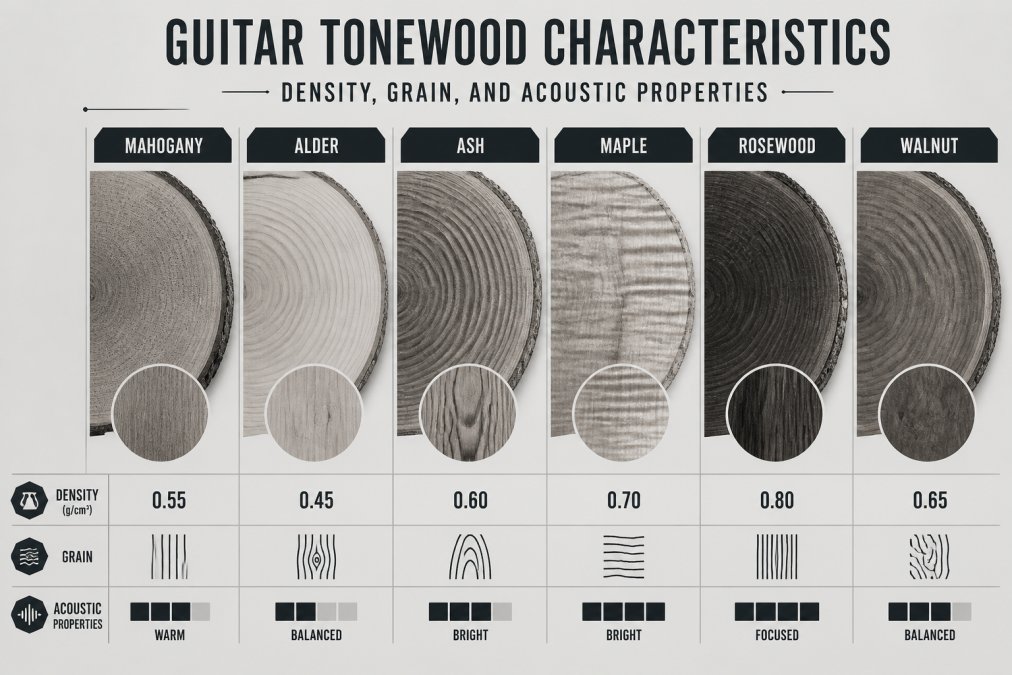
Guitar Tonewood Characteristics: Density, Grain, and Acoustic Properties
The acoustic properties that make a wood suitable for guitar building depend on three measurable factors: density, grain structure, and vibration response.
How Wood Density Affects Tone and Sustain
Wood density directly influences how long a note sustains and how clearly it projects. Spruce has a density around 450 kg/m³, making it relatively light but with excellent stiffness-to-weight ratio. Rosewood sits around 800-900 kg/m³, significantly denser, creating a more restricted vibration pattern that emphasizes midrange frequencies and produces warm, focused tone.
The relationship between density and tone isn't linear. A wood that's too dense becomes sluggish; a wood that's too light loses clarity. Wood that's properly dried to 8-12% moisture content will perform predictably, which is why luthiers age and cure tonewood carefully.
Grain Patterns and Vibration Response
Grain orientation significantly influences how efficiently sound travels through the instrument. Quarter-sawn wood, where growth rings run perpendicular to the board face, offers superior stability and more consistent vibration response compared to flat-sawn wood.
Quarter-sawn tops produce articulate, defined tone with crisp attack. Flat-sawn tops tend toward warmer, rounder tone with softer attack. Figured wood like flame maple has tighter grain structure that increases brightness and articulation, though this density increase reduces warmth slightly.
Acoustic Guitar Tonewoods Explained: Tops, Backs, and Sides
Acoustic guitar construction relies on the interaction between three wood components: the soundboard (top), the back, and the sides. Each serves a distinct acoustic function.
Soundboard Woods: Spruce, Cedar, and Alternatives
The soundboard is the primary vibrating element in an acoustic guitar. It must be stiff enough to withstand string tension, light enough to vibrate freely, and possess the right harmonic characteristics for your intended sound.
Sitka Spruce remains the industry standard for acoustic guitar tops. Acoustic guitar tonewood research from the Guitar Foundation of America confirms that Sitka spruce delivers excellent projection and versatile tonal range. It offers balanced midrange with articulate treble and defined bass response. Old-growth Sitka spruce from Southeast Alaska produces tighter grain and superior acoustic properties compared to younger, faster-growing trees.
Western Red Cedar offers distinctly different character. Softer and less dense than spruce, cedar produces warmer, more complex tone with faster response and richer overtone content. Cedar excels for fingerstyle players and those seeking intimate, woody sound, though it's more prone to dings and requires careful bracing for aggressive playing.
Engelmann Spruce sits between Sitka and cedar in density and response, offering lighter character than Sitka with more warmth, prized for classical guitars and fingerstyle instruments.
Back and Side Woods: Rosewood, Mahogany, and Sapele
East Indian Rosewood represents the gold standard for back and side woods. Dense, oily, and visually striking, rosewood produces warm, rich tone with excellent sustain and ages beautifully over time.
Mahogany offers a warmer alternative to rosewood, with less density but more pronounced midrange warmth. Honduran mahogany delivers rich, woody tone with good sustain and is more affordable than rosewood.
Sapele has emerged as a sustainable alternative to traditional mahoganies. FSC-certified and fast-growing, sapele delivers tonal character comparable to mahogany with slightly more brightness in the upper midrange.
Electric Guitar Tonewood Guide: Bodies, Necks, and Fretboards
Electric guitar tonewoods operate under different acoustic principles than acoustic instruments. Without a soundboard to amplify vibration, electric guitar tone emerges from the sustain and resonance of the body wood, vibration transfer through the neck, and harmonic content shaped by pickups and electronics.
Body Woods: Alder, Ash, and Mahogany for Balanced Tone
Alder remains the most versatile electric guitar body wood. Moderate density and balanced tonal characteristics make alder the default choice for instruments designed to work across multiple genres. It produces full-bodied tone with pronounced upper midrange and good clarity.
Ash delivers brightness and clarity, with tonal characteristics slightly more articulate than alder. Ash is denser and heavier, increasing sustain and reducing woody resonance. Swamp ash, harvested from wetland forests, is lighter and more resonant than standard ash.
Mahogany produces the warmest tone of these three, with pronounced midrange and reduced treble presence. It delivers longer sustain and thicker, rounder tone ideal for blues and classic rock.
Haynes Guitar & Bass Build offers custom body options in all three woods. The [Custom Stratocaster Body - Built to Your Spec](https://haynesguitarandbassbuild.com/products/custom-stratocaster-body-built-to-your-spec) at £240.00 lets you choose between alder and ash, tailoring the tonal foundation to your playing style.

Neck and Fretboard Woods: Stability and Playability
Maple dominates neck construction. Hard, dense, and stable, maple resists warping and twists. Maple necks feel smooth and fast under the fingers, with excellent definition and articulation. Quarter-sawn maple is the premium choice for necks, offering superior stability.
Fretboard Woods require extreme hardness and density. Ebony is the hardest fretboard wood, offering exceptional sustain and bright attack with naturally dark colour. Rosewood offers slightly warmer fretboard feel with marginally less brightness than ebony but easier sourcing.
For environmentally conscious custom builds, sustainable fretboard alternatives from the Forest Stewardship Council recommend engineered alternatives like Rocklite Ebano, which delivers similar hardness and acoustic properties without harvesting endangered species.
Tonewood Combinations for Custom Guitars: Achieving Your Target Tone
The best tonewoods for custom guitars emerge from thoughtful combinations that work in concert. Understanding how top, body, and neck woods interact allows you to design an instrument with precise tonal characteristics.
Pairing Woods by Genre and Playing Style
For fingerstyle and folk, pair cedar or Engelmann spruce tops with mahogany backs and sides. This combination prioritises warmth, responsiveness, and harmonic richness.
For strumming and projection, choose Sitka spruce tops with rosewood backs and sides. This pairing maximises projection and clarity with excellent definition across the frequency spectrum.
For electric rock and lead work, select ash body wood with maple neck and ebony fretboard. Ash delivers the brightness and clarity essential for cutting through a mix.
For blues and classic rock, mahogany body wood with maple neck creates warmth and sustain without sacrificing articulation.
Layered Tone: How Top, Body, and Neck Woods Work Together
The tonal character of a finished guitar emerges from how these wood choices layer and interact. A bright top wood paired with a warm body wood creates balance; two bright woods create excessive treble; two warm woods can become muddy.
If you want warmth but not muddiness, choose a warm top (cedar) with a neutral body (alder) and bright neck (maple). If you want brightness with complexity, choose a bright top (Sitka spruce) with a warm body (mahogany) and bright neck (maple).
Tonewood Aging and Curing: The Hidden Factor in Tone Development
The process of aging and curing tonewood fundamentally shapes how an instrument sounds. Wood that's properly aged develops tonal qualities that freshly milled wood cannot match.
Acoustic guitar tops benefit significantly from aging. New spruce or cedar can sound bright and somewhat thin; aged spruce develops deeper, more complex tone with improved sustain. This tonal development typically requires 5-10 years for noticeable results. Some luthiers artificially age wood using heat treatment or UV exposure to accelerate this process, though results don't fully replicate natural aging.
The curing process, drying freshly milled wood to optimal moisture content, is equally critical. Proper kiln drying, followed by several months of equilibration in the workshop environment, produces wood with stable acoustic properties.
When commissioning a custom build, ask your luthier about tonewood sourcing and aging. Properly aged and cured wood will outperform fresher wood, even if the species is identical.
The Tonewood Myth Debate: What Actually Affects Your Sound
The tonewood myth persists: the belief that wood species alone determines guitar tone, and that "premium" species guarantee superior sound. In reality, tonewood accounts for roughly 40% of a guitar's tonal character, with the remaining influence distributed across bracing design, body shape, hardware, and, for electric guitars, pickups and electronics.
A poorly braced instrument made from premium woods will sound worse than a well-braced instrument made from standard woods. For custom builds, focus on proper bracing design that complements your tonewood choice, tonewood that's been properly aged and cured, body shape optimised for your playing style, and pickup selection (for electric) that matches your tonal vision.
A well-designed instrument made from standard tonewood will outperform a poorly designed instrument made from premium species.
Sourcing and Ethical Harvesting: CITES, FSC, and Sustainable Tonewoods
The tonewood industry faces increasing pressure regarding sustainability and ethical sourcing. Many traditional premium tonewoods face CITES restrictions or are harvested from endangered forests.
CITES (Convention on International Trade in Endangered Species) regulates trade in endangered wood species. Brazilian rosewood and many ebony species are CITES-listed, meaning they can only be harvested and traded under strict permits.
FSC Certification (Forest Stewardship Council) indicates that wood has been harvested from responsibly managed forests that maintain biodiversity, protect indigenous rights, and ensure long-term forest health.
Sustainable Alternatives have emerged that deliver comparable acoustic properties to traditional premium tonewoods: Sapele replaces mahogany for back and side woods; Walnut replaces rosewood in some applications; Sitka Spruce from sustainably managed forests replaces rare spruce species; and engineered alternatives like Rocklite Ebano replace endangered ebony for fretboards.
When commissioning a custom build, discuss tonewood sourcing with your luthier. Many skilled builders can achieve your tonal vision using sustainable woods through thoughtful wood selection and bracing design.
| Tonewood | Acoustic Character | Sustainability | Best For |
|---|---|---|---|
| Sitka Spruce | Bright, articulate, balanced | FSC-certified available | Acoustic tops, versatile tone |
| Western Red Cedar | Warm, responsive, complex | Sustainable sourcing available | Fingerstyle, intimate tone |
| East Indian Rosewood | Warm, rich, sustain | CITES-regulated, limited availability | Acoustic backs/sides, premium builds |
| Mahogany | Warm, woody, midrange | Variable sustainability | Acoustic backs/sides, electric bodies |
| Sapele | Warm, balanced, bright | Highly sustainable | Acoustic backs/sides, eco-conscious builds |
| Alder | Balanced, articulate, responsive | Sustainable | Electric bodies, versatile tone |
| Ash | Bright, articulate, sustain | Sustainable | Electric bodies, cutting tone |
| Maple | Bright, clear, articulate | Sustainable | Necks, fretboards, tops |
| Ebony | Bright, sustain, articulate | CITES-regulated, endangered | Fretboards, premium builds |
| Rocklite Ebano | Bright, sustain, articulate | Engineered, sustainable | Fretboards, eco-conscious builds |
Choosing the best tonewoods for custom guitars requires balancing acoustic science, personal sonic preferences, budget constraints, and ethical sourcing considerations. Instruments that sound exceptional years after purchase are those where the builder understood not just which woods to use, but why those woods work together to create the intended tonal character.
Haynes Guitar & Bass Build specializes in selecting tonewood combinations tailored to your sonic vision and playing style. Whether commissioning a full custom build like the [Haynes Demeanour Custom Guitar](https://haynesguitarandbassbuild.com/products/haynes-demeanour-custom-guitar) at £3,200.00, or specifying a custom body like the Custom Telecaster Body - Built to Your Spec at £240.00, you're working with builders who understand how tonewood selection translates into instruments that feel and sound exactly as you've imagined. The best tonewoods for custom guitars are those chosen with intention, aged with care, and braced with precision, resulting in instruments that improve with every year of playing.
Frequently Asked Questions
What are the best tonewoods for custom guitar bodies?
For electric guitar bodies, alder offers balanced tone across the frequency spectrum with good clarity, while ash delivers a brighter, more articulate response. Mahogany provides warm sustain and rich midrange presence. For acoustic bodies, Sitka spruce is the industry standard for soundboards due to excellent projection and dynamic range, while East Indian rosewood and mahogany excel for backs and sides, offering resonance and warmth. Your choice depends on desired tonal character and playing style.
How do guitar tonewood characteristics affect sustain and resonance?
Wood density directly influences sustain and resonance. Denser woods like ebony and maple transfer vibrations more efficiently, producing longer sustain and brighter articulation. Less dense woods like spruce and cedar respond more quickly, offering faster attack and warmer overtones. Grain orientation and moisture content also matter, quarter-sawn wood provides superior stability and consistent resonance compared to flat-sawn. Proper curing ensures optimal moisture levels for maximum harmonic content.
Does tonewood really make a difference in guitar tone?
Yes, tonewood significantly impacts tone, though pickup quality and construction also matter. Different woods produce measurable differences in frequency response, sustain, and harmonic content. Spruce-topped acoustics project differently than cedar-topped guitars; mahogany bodies deliver warmer midrange than alder bodies. However, factors like bracing design, string quality, and setup technique are equally important. The 'tonewood myth' debate often conflates tonewood's real acoustic properties with exaggerated claims, wood choice matters, but it's one part of a larger equation.
What tonewoods are best for guitar fretboards and why?
Ebony is the traditional choice for fretboards due to its extreme density, naturally polished surface, and superior sustain characteristics. East Indian rosewood offers excellent playability and a drier, brighter tone. For sustainable alternatives, Rocklite Ebano provides similar density and appearance without CITES restrictions. Fretboard wood density ensures smooth playability, resists wear from string vibration, and contributes to overall tonal clarity. Avoid softer woods that dent easily or require frequent maintenance.
How should I combine tonewoods for the best custom guitar tone?
Layer complementary woods strategically: pair bright tops (maple, spruce) with warm bodies (mahogany, rosewood) for balanced tone. Match neck wood to body for stability, maple necks suit bright bodies, while mahogany necks complement warm tones. Consider your genre: blues players favour mahogany-heavy combinations for sustain and warmth, while rock players often prefer alder bodies with maple tops for clarity and articulation. Consult with experienced luthiers when building custom guitars to ensure woods work together cohesively.
This article was written using GrandRanker