

Commission Custom Electric Guitar UK: Complete Build Guide
Table of Contents
- What It Means to Commission Custom Electric Guitar UK
- Choosing the Right Luthier for Your Commission
- Understanding the Custom Guitar Design Process
- Custom Guitar Build Timeline: What to Expect
- Bespoke Electric Guitar Cost: Pricing Structures Explained
- Post-Build Maintenance, Setup, and Warranty
- Resale Value and Investment Potential
- Conclusion: Start Your Commission Today
Commission Custom Electric Guitar UK: Complete Build Guide
Last Updated: July 8, 2026
Commissioning a custom electric guitar in the UK means partnering with a craftsperson who will spend months translating your sonic vision into a hand-built instrument tailored entirely to your specifications. Unlike off-the-shelf purchases, a custom build requires clear communication, realistic expectations about timelines, and understanding of how design choices affect tone and playability. This guide covers everything from finding the right luthier through final setup and warranty coverage.
What It Means to Commission Custom Electric Guitar UK
Commissioning a custom electric guitar means working directly with a luthier to create an instrument designed specifically for you. Every aspect, body wood, neck profile, pickup configuration, and finish, is customized to your preferences and playing style.
A bespoke build begins with detailed consultation about tone preferences, playing style, budget, and aesthetic goals. The luthier creates design drawings, sources materials, and builds your instrument from scratch. This process typically takes 4-6 months but produces an instrument that feels and sounds uniquely yours.
The UK has a strong tradition of hand-built guitar manufacturing. British luthiers combine traditional craftsmanship with modern understanding of electronics and acoustics, with many specializing in specific tonal signatures, from bright, articulate tones to warm, thick voicings.
Choosing the Right Luthier for Your Commission
The luthier you select defines your entire commissioning experience. Start by researching UK-based builders with substantial portfolios showing diverse body styles, finishes, and hardware configurations. Read client testimonials, paying special attention to comments about communication, timeline adherence, and post-build support.
UK Luthiers vs International Builders
UK-based luthiers offer practical advantages: shorter lead times, real-time communication across the same timezone, and easier warranty resolution if issues arise. International builders sometimes offer specialized expertise, but commissioning internationally introduces complexity with import duties, VAT, longer lead times, and communication delays.
For most UK musicians, working with a local luthier makes practical sense. You have recourse if problems occur and can avoid international shipping costs and customs complications.
Evaluating Craftsmanship and Portfolio
Examine a luthier's portfolio carefully. Assess technical execution: are frets level and evenly crowned with clean, consistent bevels? Is hardware fitment precise? Are electronics cavities routed cleanly? These details reveal whether the builder prioritizes fit and finish.
Ask about specific materials and processes: which tonewoods are used and how are they sourced? What finish systems are employed? Do they hand-wind pickups or source them? Request references from previous clients, particularly those who commissioned similar instruments.
Understanding the Custom Guitar Design Process
Designing your custom guitar involves making interconnected decisions about tone, materials, hardware, and aesthetics. The design process typically unfolds over 2-4 weeks of consultation before construction begins.
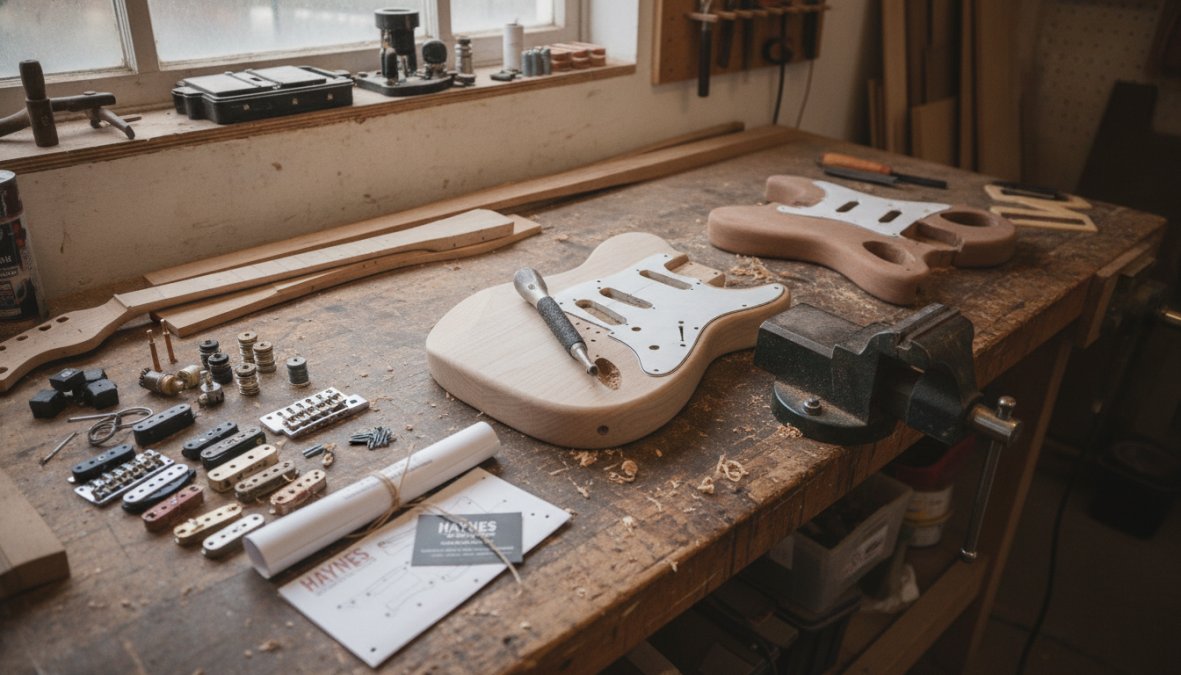
Defining Tone and Sound Requirements
Your tonal goals are the foundation of every other decision. Listen to recordings of guitars you admire and identify what you want to hear. Tone emerges from body wood density, neck-to-body joint design, pickup type and position, bridge configuration, and electronics wiring.
Discuss your playing context with the luthier: studio recording, live performance, or home playing. Different environments and amplifier types interact with your guitar's tonal characteristics. Be specific about your sonic goals but remain open to the luthier's expertise about what's realistic given your budget.
Selecting Tonewoods and Materials
Tonewoods profoundly influence tone. Mahogany produces warm, woody sustain. Alder offers balanced, punchy response. Ash delivers bright, articulate tone. Maple adds snap and clarity. Body wood matters most for overall tone; neck and fretboard wood have minimal tonal impact.
Ask your luthier about moisture content and grain structure of specific wood batches. Expect to pay more for premium tonewoods, but understand that expensive wood doesn't guarantee better tone, the luthier's skill in selecting and working with materials matters most.
Hardware, Pickups, and Electronics
Different bridge types (hardtail, floating, fixed) affect sustain and tuning stability. Pickup selection defines your instrument's voice as much as wood choice. Hand-wound pickups offer tonal characteristics and responsiveness that mass-produced pickups often lack. Discuss pickup voicing with your luthier: do you want high-output aggression, articulate clarity, or something in between?
Electronics wiring affects usability and tone. A simple three-way selector with volume and tone controls is straightforward and reliable. More complex configurations add versatility but also complexity and potential failure points.
Body Shape, Neck Profile, and Ergonomics
Body shape is partly aesthetic, partly functional. Stratocaster-style bodies offer comfort for sitting and standing play. Offset designs provide unique aesthetics and upper fret access. Discuss which shape feels most natural in your hands.
Neck profile dramatically affects playability. A thin, flat neck suits fast lead playing; a thicker, rounded neck provides substantial feel for rhythm playing. Fretboard radius affects chord comfort and bending smoothness. Modern instruments typically use 9.5-inch to 12-inch radius.
Scale length (typically 25.5 inches) affects tone, string tension, and playability. Shorter scales feel easier to play but may sound slightly thinner. Nut width determines string spacing; standard is 1.69 inches, but custom widths accommodate different hand sizes.
Finish and Aesthetic Customization
Finish choices include nitrocellulose lacquer (traditional, thin, resonant but fragile), polyurethane (durable, thick, slightly dampens tone), or oil finishes (minimal, natural-looking, require maintenance). Each has tonal and practical implications.
Color, inlay work, binding, and pickguard material are personal choices. Custom inlays add cost and build time but create a truly unique instrument. Provide reference images of finishes and details you admire to your luthier.
Custom Guitar Build Timeline: What to Expect
A typical custom build takes 4-6 months from initial consultation to final delivery, though this varies based on complexity and the luthier's workload.
Phase 1: Consultation and Design (2-4 weeks) You discuss your vision with the luthier. Design drawings are created and refined until both parties agree on specifications.
Phase 2: Material Sourcing (1-2 weeks) The luthier sources tonewoods, hardware, pickups, and electronics. Some materials may already be in stock; others require ordering.
Phase 3: Body and Neck Construction (6-10 weeks) The body is shaped and routed for electronics cavities. The neck is carved, fitted with frets, and finished. This is the most time-intensive phase.
Phase 4: Assembly and Wiring (2-3 weeks) Hardware and electronics are installed. Pickups are wired according to your specifications. Everything is tested for function.
Phase 5: Finishing (2-4 weeks) The instrument is finished with multiple coats applied and sanded between applications.
Phase 6: Final Setup and Testing (1-2 weeks) Intonation is adjusted, action refined, and the instrument tested thoroughly before shipping.
Deposit, Lead Times, and Payment Schedule
Most UK luthiers require a deposit (typically 30-50% of total price) to secure your commission slot. This deposit is usually non-refundable but may be credited toward the final price if you cancel before materials are committed.
Common payment schedules include:
- 50% deposit upfront, 50% on completion
- 33% deposit, 33% at midpoint, 34% on completion
- Full payment upfront (sometimes offered as a discount)
Clarify payment terms before committing. Ask about current lead times; some builders have 6-month waiting lists while others can begin within weeks.
Bespoke Electric Guitar Cost: Pricing Structures Explained
Custom guitar pricing varies widely based on specifications, materials, and the builder's reputation.
Base Price vs Customization Add-Ons
Most luthiers offer a base price for a standard custom build. The Haynes Demeanour Custom Guitar, for example, starts at £3,200, fully customizable to your specifications. This covers the core build: body, neck, frets, hardware, and electronics.
Add-ons increase the final price:
- Premium tonewoods: +£200-£800
- Custom pickup winding: +£150-£400
- Hand-wound pickup sets: +£300-£600
- Advanced electronics: +£100-£300
- Custom inlay work: +£200-£1,000
- Premium finishes: +£100-£500
- Vibrato systems: +£150-£400
The Haynes SC22 Custom Guitar starts at £3,600. These prices reflect the UK luthier market for hand-built, bespoke instruments with quality materials and craftsmanship.
UK-Specific Costs and Import Considerations
Commissioning from a UK luthier avoids international shipping costs and import duties. Domestic courier delivery typically costs £30-£80, fully insured.
Factor these costs into your budget:
- Base build: £3,200-£4,500
- Customization add-ons: £500-£2,000
- Shipping (domestic): £50-£100
- Setup adjustments (if needed post-delivery): £50-£150
A fully customized, premium build typically costs £4,500-£6,000 in the UK market, reflecting the time, skill, and materials involved in hand-built construction.
Post-Build Maintenance, Setup, and Warranty
Your instrument's lifespan and performance depend heavily on proper maintenance and setup after delivery.
Initial Setup and Intonation
When your guitar arrives, check intonation using a tuner. Fret the 12th fret and compare the harmonic to the fretted note; they should match exactly. If the fretted note is sharp, the bridge saddle needs to move back; if flat, it moves forward. Contact your luthier if intonation is off, as minor setup adjustments are typically covered under warranty.
Truss rod adjustment affects neck relief and prevents fret buzz. If you notice fret buzz or excessive action, contact your luthier rather than attempting adjustment yourself.
Action (string height above the fretboard) affects playability and tone. Discuss your action preference with the luthier during design; they'll set it accordingly.
Warranty Coverage and Long-Term Care
Most UK luthiers offer a 1-2 year warranty covering defects in materials and craftsmanship. Structural issues, electronics failures, and fret wear are usually covered; damage from accidents or neglect typically is not.
Long-term care extends your instrument's life:
- Store in stable environment: 40-60% humidity, 18-24°C temperature
- Use a humidifier in dry climates to prevent wood cracking
- Clean the fretboard periodically with lemon oil
- Wipe down strings after playing to prevent corrosion
- Replace strings every 3-6 months depending on playing frequency
- Have the guitar professionally setup annually if played regularly
Resale Value and Investment Potential
UK-built custom guitars from respected luthiers typically hold 60-75% of their original value after 5 years, assuming they're well-maintained. This is significantly better than production guitars, which typically hold 40-50% of value over the same period.
Factors affecting resale value include luthier reputation, condition, specifications, documentation, and market demand. Build something you genuinely love playing rather than something you think will appreciate. A custom guitar is ultimately a personal instrument; if it appreciates in value, that's a bonus, but the real return is in the playing experience.
Commissioning a custom electric guitar in the UK results in an instrument tailored precisely to your needs. The journey from initial consultation through final delivery teaches you about your own playing preferences and connects you with a craftsperson dedicated to their art. Whether you're chasing a specific tone, seeking ergonomic perfection, or wanting an instrument that reflects your personal style, a custom commission delivers what mass production cannot: a guitar built specifically for you.
Key Commissioning Decisions at a Glance
| Decision Area | Key Factors | Typical Timeline | Budget Impact |
|---|---|---|---|
| Luthier Selection | Portfolio quality, communication style, specialization | 2-4 weeks research | Varies by builder |
| Tonal Specifications | Body wood, pickups, electronics configuration | Defined in consultation | £500-£2,000 add-ons |
| Neck Profile & Ergonomics | Scale length, nut width, fretboard radius | Finalized in design phase | Minimal additional cost |
| Aesthetic Customization | Finish type, inlay work, binding, color | Affects build timeline | £200-£1,500 add-ons |
| Hardware & Electronics | Bridge type, tuning machines, wiring complexity | Sourced in phase 2 | £300-£800 variation |
| Payment Schedule | Deposit amount, milestone payments | Agreed before build starts | Affects cash flow planning |
The Luthier's Handbook on Custom Guitar Specifications
Understanding technical specifications is essential before commissioning. Many builders provide detailed guides on how different woods, hardware, and electronics interact to produce specific tonal characteristics.
UK Guitar Builders Association Directory and Standards
The UK has a thriving community of professional luthiers and builders. This directory helps you identify qualified craftspeople and understand industry standards for custom builds.
Guitar Maintenance and Humidity Control Guide
Proper post-build maintenance is critical for preserving your investment. This comprehensive guide covers storage, humidity management, and routine care for hand-built instruments.
Frequently Asked Questions
How much does it cost to commission a custom electric guitar in the UK?
Bespoke electric guitar cost in the UK typically ranges from £2,500 to £5,000+ depending on specifications. Haynes Guitar & Bass Build's custom models start at £3,200 for hand-built instruments with custom bodies, necks, and hand-wound pickups. Costs increase with premium tonewoods, exotic finishes, and advanced electronics. Always request a detailed quote after discussing your exact specifications.
How long does it take to build a custom electric guitar?
Custom guitar build timeline varies by luthier and complexity, typically ranging from 4 to 12 months. Lead times depend on current orders, material sourcing, and the intricacy of your design. UK-based luthiers often provide faster turnaround than overseas builders. Contact your chosen luthier early to confirm realistic delivery dates and understand their commissioning process.
What should I know before commissioning a custom guitar?
Before commissioning, research luthiers' portfolios, understand the custom guitar design process, and have clear ideas about tone preferences, body style, and budget. Know that deposits are typically required upfront, and specifications cannot change mid-build. Discuss warranty terms, setup services, and post-build maintenance. Consider UK-specific import considerations if sourcing materials internationally.
Will a bespoke custom guitar hold its resale value?
Custom guitars built by reputable UK luthiers often retain strong resale value, especially hand-built instruments with quality components and documented craftsmanship. Resale depends on the luthier's reputation, condition, originality of specifications, and market demand for your particular design. Documented build records and warranty history enhance value. However, highly personal customizations may appeal to fewer buyers than standard designs.
This article was written using GrandRanker