

Custom Made Electric Guitar Pricing: A 2026 Guide
Table of Contents
- Understanding Custom Made Electric Guitar Pricing
- Base Model Pricing vs Custom Upgrades
- Luthier vs Factory Guitar: Pricing Differences
- Factors Influencing Custom Electric Guitar Cost
- Custom Electric Guitar Features and Their Cost Impact
- Custom Guitar Build Time and Lead Times
- Custom Guitar Deposit Requirements and Payment Plans
- Hidden Costs and the Diminishing Returns Threshold
Custom Made Electric Guitar Pricing: A 2026 Guide
Last Updated: July 11, 2026
Understanding custom made electric guitar pricing requires looking beyond the headline cost. When musicians commission a hand-built instrument from a luthier, they're investing in an instrument tailored to their exact specifications, tone preferences, and playing style. Custom guitar pricing typically ranges from £2,500 to £6,000 or more, depending on customization and craftsmanship. This guide breaks down the real costs behind bespoke builds, helping you understand where your money goes and when premium upgrades deliver genuine value.
The pricing landscape for custom guitars differs dramatically from factory production. A standard Fender Stratocaster might cost £400-800, while a custom made electric guitar reflects hand-crafted construction, premium materials, and extended production timelines. Below, we'll show you how to evaluate pricing across different builders and identify which upgrades genuinely improve your instrument.
Understanding Custom Made Electric Guitar Pricing
Custom guitar pricing exists on a spectrum determined by builder reputation, materials, complexity, and location. A boutique luthier in the UK typically charges more than factory-customized options, reflecting genuine craftsmanship differences. According to Guitar World's luthier market analysis, hand-built instruments command a 40-60% premium over mass-produced alternatives, primarily due to production time and material selection.
The core principle: custom made electric guitar pricing reflects the builder's experience level, instrument complexity, and materials chosen. A simple single-pickup slab-body guitar from an emerging builder costs significantly less than a hand-carved double-cutaway with inlay work from an established luthier.
Most builders structure pricing around a base model cost, then add upcharges for specific customizations. At Haynes Guitar & Bass Build, custom guitars start at £3,200 for the Demeanour, Fidelity, or Inflection models, with the SC22 starting at £3,600.
Base Model Pricing vs Custom Upgrades
Standard configuration starting points anchor the pricing conversation. Most luthiers offer a foundation package including a basic body shape, standard tonewood, simple hardware, and hand-wound pickups, typically running £2,800-3,500 for UK-based builders.
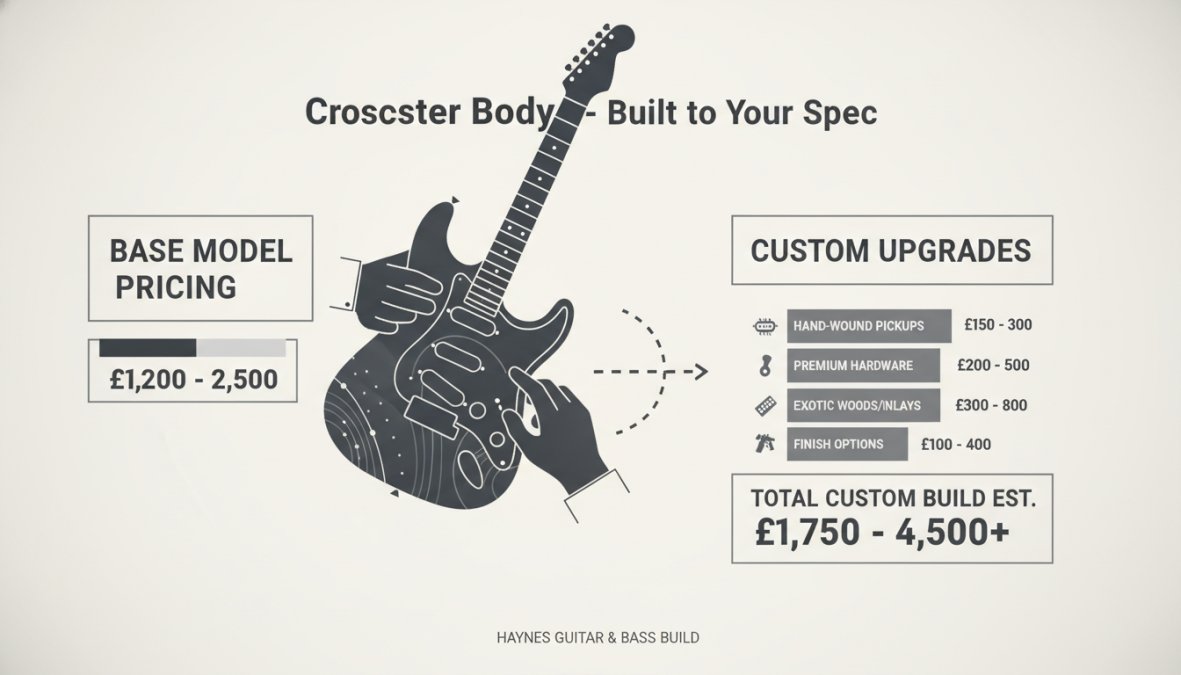
From this foundation, upcharges accumulate based on your specifications. A premium tonewood upgrade adds £200-500. Custom body shaping or double-cutaway design adds £300-800. Inlay work runs £150-600 depending on complexity. Hand-wired electronics costs £200-400 more than standard wiring. Hardware specifications add £100-300, and boutique pickups add £150-400. Complex finishes can add £200-600.
| Upgrade Category | Typical Cost | Impact on Tone | Impact on Playability |
|---|---|---|---|
| Premium Tonewood | £200-500 | High | Medium |
| Custom Body Shape | £300-800 | Low | High |
| Hand-Wired Electronics | £200-400 | High | Medium |
| Inlay Work | £150-600 | None | None |
| Premium Hardware | £100-300 | Low | High |
| Boutique Pickups | £150-400 | High | Low |
| Nitrocellulose Finish | £200-600 | Low | Low |
Consider which upgrades align with your actual needs. A gigging musician prioritizes playability upgrades (neck profile, bridge quality, tuning stability) over cosmetic ones. A studio player might invest heavily in electronics and pickups but care less about inlay work.
Luthier vs Factory Guitar: Pricing Differences
Hand-built craftsmanship versus mass production creates the fundamental pricing divide. A luthier-built guitar involves one craftsperson constructing your instrument from start to finish, making individual decisions about wood selection, neck joint execution, and setup. Factory-customized guitars use production-line construction with customization options applied at specific stages.
The hand-built approach justifies higher pricing through several factors. Luthiers hand-select tonewood, hand-carve bodies, and hand-fit neck joints, a skilled luthier spends hours ensuring perfect fit. This meticulous approach takes 8-16 weeks per instrument, versus 3-4 weeks for factory-customized builds.
Factory-customized guitars offer faster turnaround and lower pricing, typically £1,500-2,500. These instruments use CNC machinery for consistency but sacrifice subtle variations hand-built instruments possess. The trade-off: faster delivery and lower cost, but less individual attention to your specific preferences.
Bespoke builds represent the premium tier, running £4,000-8,000+ and involving the builder creating something unique to your requirements. The pricing reflects genuine differences in production methodology, material selection, and time investment.
Factors Influencing Custom Electric Guitar Cost
Materials and tonewood selection impact pricing substantially. Mahogany and alder represent budget-friendly options (£100-200). Figured maple, walnut, or rosewood add £300-600. Exotic woods command premium pricing at £400-800. Neck wood selection similarly affects cost, figured maple or exotic fretboard materials add £100-250.
Hardware and electronics customization represents another significant cost driver. Bridge assembly quality affects tuning stability and sustain. A locking tremolo system adds £150-300. Hand-wired electronics with point-to-point wiring costs substantially more than printed circuit board construction, but delivers superior tone and durability.
Pickup selection profoundly influences both cost and tone. Hand-wound pickups cost £150-250 per pickup, while boutique pickup makers charge £200-400. Pickup configuration matters, a simple single-coil setup costs less than humbucker-equipped instruments.
Design complexity drives costs upward. A simple slab-body Telecaster-style guitar costs less than a contoured double-cutaway with ergonomic body shaping. Inlay work adds substantial labor time, from £150-250 for simple block inlays to £400-800 for complex custom designs.
Custom Electric Guitar Features and Their Cost Impact
Neck profile and scale length specifications affect both pricing and playability. A standard 25.5-inch scale represents the baseline. Shorter or longer scales require custom neck construction, adding £100-200. Custom profiling adds £75-150.
Fretboard radius influences playability. Standard 9.5-inch radius suits most players. Compound radius (changing from curved at the nut to flatter at higher frets) adds £100-200. These specifications matter for comfort and playing technique.
Hand-wired electronics versus standard wiring represents a critical distinction. Hand-wired construction involves individually wiring components using cloth-covered wire, creating point-to-point connections. Hand-wired instruments cost £200-400 more but deliver superior tone clarity, reduced noise, and increased durability.
Finish options dramatically affect pricing and aesthetics. Solid color lacquer finishes cost least. Transparent finishes revealing wood grain add £100-200. Nitrocellulose finishes add £200-400 due to application complexity. Some builders offer custom graphics, adding £300-600.
Custom Guitar Build Time and Lead Times
Production lead time varies dramatically based on builder workload and project complexity. Most established luthiers maintain 6-12 month waiting lists. A simple custom specification might complete in 8-10 weeks, while complex builds extend to 16+ weeks.
Lead time reflects genuine production requirements. A luthier hand-selecting tonewood, allowing wood to acclimate, hand-carving the body, hand-fitting the neck, and hand-winding pickups requires substantial time. Builders offering 4-week turnarounds either maintain large inventory or cut corners.
Rush orders carry significant premiums, typically 25-50% additional fees. Some builders refuse rush orders entirely, prioritizing quality over speed. Understanding lead times prevents frustration, commission 6-12 months ahead of your need date.
Custom Guitar Deposit Requirements and Payment Plans
Deposit structure protects both builder and customer. Most luthiers require 25-50% deposit upon commission, with the remainder due upon completion. Some builders request deposits in installments: initial deposit to begin work, second payment at midpoint, and final payment before delivery.
Clear payment terms prevent misunderstandings and demonstrate professionalism. Most builders retain deposits if you cancel after work begins, as they've already purchased materials and devoted production time. Read cancellation terms before commissioning.
| Payment Stage | Typical Percentage | Timing | What Happens |
|---|---|---|---|
| Initial Deposit | 25-50% | Upon commission | Materials purchased, production begins |
| Midpoint Payment | 25% | Body/neck complete | Inspect progress, verify specifications |
| Final Payment | 25-50% | Before delivery | Settle remaining balance, receive instrument |
Some builders offer financing options through third-party lenders, spreading payments over 12-24 months. This approach makes premium instruments accessible to players unable to pay upfront.
Hidden Costs and the Diminishing Returns Threshold
Unexpected expenses emerge during custom builds despite careful planning. Setup costs sometimes require additional fees (£50-150) if not included in the quoted price. Shipping costs add £50-200. Case or gig bag purchases add £100-400 to the total investment.
The diminishing returns threshold represents the point where additional customization adds cost without proportional value improvement. Hand-wired electronics deliver measurable tonal improvement and justify the £200-400 cost. Premium hardware improves tuning stability and sustain. Inlay work adds purely cosmetic value.
Prioritize upgrades affecting tone and playability: tonewood selection, electronics, pickups, hardware, and neck specifications. Cosmetic upgrades should come after functional upgrades fit your budget. A £4,000 instrument with excellent tone and playability but simple aesthetics outperforms a £4,500 instrument with stunning inlay work but mediocre electronics.
Research suggests that tone and playability improvements plateau around £4,000-5,000 for most players. Beyond this threshold, cost increases reflect builder reputation, exotic materials, and cosmetic complexity rather than measurable performance gains.
Consider resale value when planning customization. A simple, well-executed custom guitar holds value better than an overly complex instrument with niche specifications. Standard specifications maintain resale value better than highly personalized designs.
Vetting a Luthier: Quality Checklist
Selecting the right builder determines whether your custom made electric guitar pricing delivers genuine value. Research builder reputation through online reviews, social media portfolios, and direct references from previous customers. Request contact information for three recent commissions.
Examine the builder's portfolio carefully. Quality luthiers document their work through detailed photographs showing wood grain, inlay work, electronics, and finished instruments. Request to see instruments in person if possible.
Ask about materials sourcing. Quality builders can explain where they source tonewood and how they acclimate wood before construction. Inquire about warranty coverage, reputable builders guarantee their work against defects for 1-2 years.
Verify the builder's communication style. Do they respond promptly to inquiries? Do they ask detailed questions about your playing style and preferences? Builders who care about your satisfaction invest time understanding your needs.
Request a written specification sheet detailing every element of your custom guitar. This document prevents misunderstandings and provides reference during production. Builders unwilling to provide written specs are unreliable.
Assess pricing transparency. Quality builders explain their pricing structure clearly, breaking down base cost and upcharges. Builders offering suspiciously low pricing either cut corners or lack experience.
According to Reverb's luthier marketplace data, builders with 5+ years of experience and documented customer satisfaction typically deliver superior instruments.
Commissioning a custom made electric guitar pricing investment requires understanding where costs concentrate and which upgrades deliver genuine value. Whether you prioritize tone, playability, or aesthetics, clarity about your priorities prevents overspending.
Haynes Guitar & Bass Build offers hand-built custom guitars starting at £3,200, with options ranging from the Demeanour, Fidelity, and Inflection models to the SC22 at £3,600. Each instrument features hand-wound pickups and made-to-order customization tailored to your specifications. Explore our full range of custom guitars and discuss your build requirements by visiting our contact page to begin your commission.
Frequently Asked Questions
How much does a custom made electric guitar cost?
Custom made electric guitar pricing typically starts around £3,200 for hand-built instruments from UK boutique builders like Haynes Guitar & Bass Build, with premium models reaching £3,600 or more. Costs depend on tonewood selection, hardware specifications, hand-wound pickups, and design complexity. Entry-level custom shop guitars may begin lower, but true bespoke builds from experienced luthiers command higher prices due to craftsmanship and personalized consultation.
What factors influence the price of a custom guitar most significantly?
The primary cost drivers are tonewood choice, hardware and electronics quality, hand-wound pickup specifications, and design complexity including inlay work and finish type. Neck profile customization, scale length options, and fretboard radius adjustments add moderate upcharges. Production lead time and rush order fees also impact final pricing. Consulting directly with your luthier helps identify which upgrades deliver genuine tonal and playability benefits versus diminishing-return cosmetic additions.
What's the difference between a luthier-built guitar and a factory-customized one?
A luthier-built guitar is hand-crafted from start to finish by a single skilled craftsperson or small team, offering complete design control and bespoke customization. Factory-customized guitars use assembly-line production with selected upgrade options like pickup swaps or finish choices. Luthier builds typically cost more but provide superior craftsmanship, tonal refinement, and ergonomic precision. Factory-customized options offer faster lead times and lower prices but less individual attention to detail and fewer radical design possibilities.
How long does a custom guitar build take and what affects production lead time?
Custom guitar build times typically range from 8-16 weeks depending on design complexity, material availability, and the builder's current workload. Rush orders may incur additional fees but can compress timelines by 2-4 weeks. Intricate inlay work, premium tonewood sourcing, and hand-wired electronics extend production schedules. Discussing build time expectations and production milestones during your initial consultation ensures realistic expectations and helps you plan payment schedules accordingly.
This article was written using GrandRanker