

Hand Crafted Electric Guitar Builds: Complete Guide
Table of Contents
- What Makes Hand Crafted Electric Guitar Builds Different
- Essential Luthier Tools for Guitar Building
- Selecting Best Tonewoods for Electric Guitars
- The Custom Electric Guitar Build Process
- Advanced Electronics Customization for Hand Crafted Builds
- Finishing, Setup, and Troubleshooting Your Hand Crafted Electric Guitar
- DIY Guitar Kits vs Building from Scratch
- Conclusion
Hand Crafted Electric Guitar Builds: Complete Guide
Last Updated: July 15, 2026
Hand crafted electric guitar builds represent a shift from mass production toward personalized instrument creation. At Haynes Guitar & Bass Build, we've learned that the difference between a generic instrument and an exceptional one comes down to intentionality at every stage. This guide walks you through building your own electric guitar from the ground up, covering tonewoods, assembly, electronics, and final setup.
What Makes Hand Crafted Electric Guitar Builds Different
Factory instruments optimize for speed and consistency. A luthier optimizes for tone and feel. Hand crafted builds allow customization that factory guitars cannot match: you choose body wood based on tonal preference, select pickups for your playing style, shape the neck to fit your hands, and decide on active or passive electronics based on your actual needs.
The result is an instrument tailored to your exact specifications, where every decision reflects your vision rather than a manufacturer's compromise.
Essential Luthier Tools for Guitar Building
Building a hand crafted electric guitar requires specific tools, but you don't need a fully equipped shop to start.
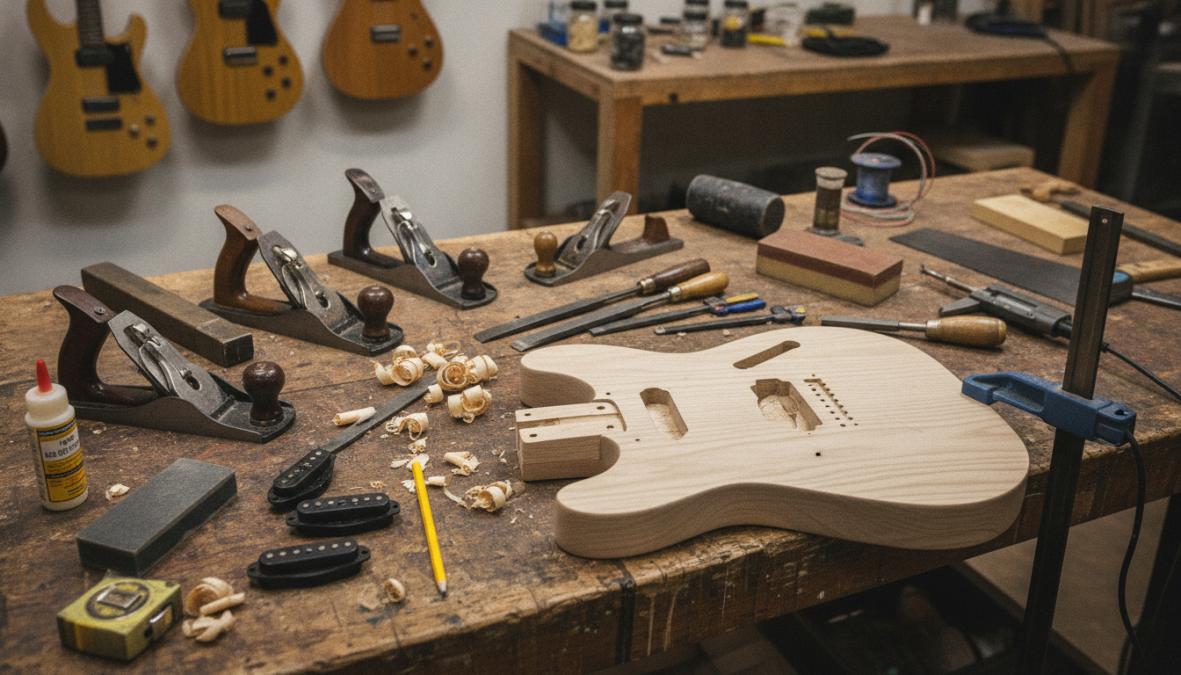
Hand Tool Essentials vs CNC Machining
Hand tool woodworking remains the foundation of quality luthier work. A quality chisel removes wood with precision that no machine can match. Files shape frets and fretboard slots. Calipers measure neck thickness to tolerances of a few thousandths of an inch.
CNC machining accelerates certain tasks like body routing and neck shaping. Many professional luthiers use CNC for initial blanks, then hand-finish everything else. For hand crafted builds, CNC is optional, not essential.
Budget-Friendly Starter Toolkit
You can begin with minimal investment:
- Chisels (4-6 sizes): 200-400 GBP
- Files (needle, flat, round): 50-100 GBP
- Calipers and measuring tools: 30-50 GBP
- Clamps (4+ bar clamps): 60-80 GBP
- Sandpaper and sanding blocks: 20-30 GBP
- Soldering iron and solder: 40-60 GBP
- Drill press or hand drill: 50-150 GBP
- Saw (Japanese pull saw): 30-50 GBP
Total starter investment: 500-900 GBP. Invest in fewer quality tools rather than many mediocre ones.
Selecting Best Tonewoods for Electric Guitars
Wood choice fundamentally affects your guitar's tone. Different species vibrate at different frequencies, producing distinct sonic characteristics.
Alder delivers warm, balanced tone with pronounced midrange. It's forgiving for first builds and works well with both bright and dark pickup configurations.
Ash produces bright, articulate tone with strong treble response. Figured ash offers visual appeal alongside tonal characteristics.
Mahogany yields warm, thick tone with strong sustain and excellent stability in necks.
Maple is bright and articulate, often used for necks and tops. Hard maple provides excellent fret durability.
Walnut produces warm, dark tone similar to mahogany but with slightly different frequency response.
Sourcing Sustainable Tonewoods
The wood you select should be responsibly sourced. Alder and ash are generally sustainable when sourced from managed forests. Mahogany sourcing requires care, verify that your supplier uses legally harvested wood from sustainable operations.
Alternatives exist for nearly every tonewood. Poplar offers similar tonal characteristics to alder at lower cost. When sourcing wood, ask your supplier about origin and harvest practices.
The Custom Electric Guitar Build Process
The build process follows a logical sequence where each step builds on the previous one.
Body Shape and Neck Profile Selection
Your first decision: what does the guitar look like? Body shape affects both aesthetics and playability.
Stratocaster-style bodies offer ergonomic comfort and established proportions. Neck access to upper frets is excellent.
Telecaster-style bodies are simpler and lighter, easier for first projects.
Offset designs (Jazzmaster, Jaguar) provide unique aesthetics and ergonomics.
Solid slab designs (Les Paul-style) are heavier and produce different tonal characteristics through increased mass.
Neck profile, the cross-sectional shape, affects playability significantly. A thin, flat neck suits fast playing. A rounder, thicker neck provides more substance and suits blues-oriented playing. Scale length ranges from 24 inches (shorter, easier) to 25.5 inches (brighter tone, standard).
Haynes Guitar & Bass Build's Custom Stratocaster Body - Built to Your Spec at 240 GBP provides a precisely routed body, letting you focus on assembly, electronics, and finishing.
Assembly, Wiring, and Hardware Installation
Once your body and neck are ready, assembly begins. Start with hardware installation: bridge, tuning machines, strap buttons, and output jack all mount before electronics. Measure twice, drilling holes in the wrong spot ruins months of work.
Neck mounting comes next. Most bolt-on designs use four screws through the neck pocket into the neck block. The fit must be tight but not forced.
Electronics installation requires careful planning. Soldering is a skill worth practicing on scrap wire before touching your actual build. The wiring harness can be pre-assembled and tested before installation, catching problems before they're buried inside the guitar.
Advanced Electronics Customization for Hand Crafted Builds
Standard passive electronics are simple and reliable. Hand crafted builds open doors to advanced customization.
Soldering and Wiring Harness Setup
A quality soldering iron (25-40 watts) and rosin-core solder are essential. Heat the joint for 2-3 seconds, then apply solder. It should flow smoothly onto the heated joint. If it beads up, you haven't heated the joint sufficiently.
A wiring harness pre-assembled on a test board lets you verify everything works before installation. Test continuity with a multimeter and confirm signal reaches the output jack.
Active Circuitry and Pickup Winding
Active electronics, powered by a battery, offer tone shaping beyond passive controls. Active preamps boost signal strength and allow EQ adjustments.
Pickup winding involves wrapping thin wire around a magnet thousands of times. For most hand crafted builds, purchasing quality pickups makes more sense than winding. Focus your effort on aspects where hand work creates the most value.
Finishing, Setup, and Troubleshooting Your Hand Crafted Electric Guitar
The finish protects the wood and affects appearance and feel.
Sanding, Finish Application, and Intonation
Sand progressively: start with 120-grit to remove tool marks, move to 180-grit for smoothing, finish with 220-grit. Use tack cloth between coats to prevent dust. Apply finish in thin coats rather than one thick coat.
After finish cures, intonation adjustment begins. Adjust saddle position in small increments (1mm changes are significant). Check the 12th fret harmonic against the fretted note at the 12th fret and adjust until they match.
Common Build Mistakes and How to Avoid Them
Neck angle issues create playability problems. Check with a straightedge along the frets before assembly.
Electronics problems usually stem from cold solder joints or reversed connections. Test everything before closing the body cavity.
Finish problems like runs and dust result from rushing. Patience with sanding and multiple thin coats beats speed.
Fret crown issues occur when frets aren't level. Consider having a professional handle fret leveling if inexperienced.
Hardware compatibility surprises many builders. Ensure bridge type matches your body routing and that components fit your chosen cavity locations.
| Common Mistake | Root Cause | Prevention |
|---|---|---|
| Neck angle problems | Improper shim placement or pocket fit | Check neck angle before assembly with straightedge |
| Electronics failures | Cold solder joints or reversed connections | Test harness before installation with multimeter |
| Finish defects | Dust or rushing application | Sand between coats, use tack cloth, apply thin coats |
| Fret buzz or high action | Frets not level or neck not straight | Use straightedge to check neck before assembly |
| Intonation issues | Bridge saddle position incorrect | Make small adjustments and check at 12th fret |
DIY Guitar Kits vs Building from Scratch
Guitar kits offer a middle path between buying finished guitars and building entirely from raw materials. A quality kit includes pre-routed body and neck, pre-slotted fretboard, and sometimes pre-assembled electronics.
The advantage: you skip the most technically demanding woodworking steps. The disadvantage: you lose control over material selection.
For learning the craft, a kit is reasonable. You understand assembly, electronics, and setup without needing to master body shaping first. Haynes Guitar & Bass Build offers [Telecaster Guitar Plans - CNC & Handbuild Download](https://avhkbx-bp.myshopify.com/products/telecaster-guitar-plans-cnc-handbuild-download) at 45 GBP, providing professional plans for builders who want to source their own wood.
Hand crafted electric guitar builds demand patience, precision, and genuine care for the instrument taking shape under your hands. The satisfaction of playing an instrument you built yourself, one that reflects your choices in wood, electronics, and design, justifies the effort. Start with quality tools, take time with each step, and don't rush the finish.
According to Luthier Guild research on custom instrument building, hand-built guitars maintain their value significantly better than mass-produced alternatives, with some vintage hand crafted builds appreciating over time.
For those serious about hand crafted electric guitar builds, Woodworking Institute standards for instrument construction provides detailed specifications for neck angles, fretwork, and hardware installation.
If you're ready to begin your own hand crafted electric guitar build, Haynes Guitar & Bass Build provides custom bodies and precision components designed to support builders at every skill level.
Frequently Asked Questions
What makes a hand crafted electric guitar better than mass-produced?
Hand crafted electric guitar builds offer superior tone quality because each component, from tonewood selection to pickup winding, is chosen specifically for your instrument. Luthiers carefully match body woods for resonance, hand-wind pickups for clarity, and set intonation precisely. Mass-produced guitars prioritize cost efficiency, often using lower-grade materials and standardized assembly. The attention to detail in hand crafted builds results in instruments that play and sound noticeably better, with playability customized to your exact specifications.
How long does it take to build a hand crafted electric guitar?
A complete hand crafted electric guitar build typically takes 40-80 hours depending on complexity and experience level. Beginners using luthier tools for guitar building may spend 60-100 hours on their first build, including body shaping, neck finishing, electronics wiring, and final setup. Professional luthiers often work faster due to experience with hand tool woodworking and CNC machining. The timeline includes wood selection, body carving, fretboard work, soldering, hardware installation, and intonation adjustment, each phase requiring careful attention to achieve professional results.
What are the most important factors in a custom guitar build?
The three pillars of successful custom electric guitar builds are tonewood selection, electronics quality, and setup precision. Best tonewoods for electric guitars like alder and ash directly impact resonance and sustain. Your choice of pickups, wiring harness configuration, and bridge hardware determines playability and tone character. Finally, proper intonation, truss rod adjustment, and nut slotting ensure the instrument plays reliably across the fretboard. Each factor compounds, excellent tonewoods won't shine without quality pickups, and premium components won't perform without meticulous setup.
Is it cheaper to build your own hand crafted electric guitar?
Building a hand crafted electric guitar can be cost-effective compared to boutique custom shops, but requires upfront investment in luthier tools for guitar building. A DIY build using quality components typically costs £400-£800, while professional custom shops charge £1,500-£3,000+. However, factor in learning time and potential mistakes, your first build may require tool purchases and rework. Using DIY guitar kits reduces complexity and costs, though they sacrifice some customization. Sourcing sustainable tonewoods and hand-wound pickups adds value but increases price. The real savings come from personal satisfaction and the ability to build exactly to your specification.
This article was written using GrandRanker