

Hand Wound Pickups for Telecaster: A 2026 Guide
Table of Contents
- What Makes Hand Wound Pickups for Telecaster Different
- Scatter Wound Telecaster Pickups: Vintage Winding Techniques Explained
- Alnico vs Ceramic Telecaster Pickups: Which Magnet Type Matters
- Top Hand Wound Telecaster Pickup Options in the UK
- How to Install Telecaster Pickups: A Practical Guide
- Tone Characteristics: Twang, Chime, and Bite Explained
- Maintenance and Longevity of Hand Wound Pickups
- Conclusion
Last Updated: August 6, 2026
What Makes Hand Wound Pickups for Telecaster Different
Hand wound pickups for telecaster differ fundamentally from mass-produced alternatives. A skilled winder controls tension, coil geometry, wire placement, and subtle variations that machines cannot replicate. Scatter wound construction, where wire overlaps in non-uniform patterns, creates a complex magnetic field that enhances harmonic content, improves string definition, and delivers natural compression flattering both clean and overdriven tones.
Hand wound pickups respond differently to playing technique. Dynamics translate faithfully, attack is sharper, and sustain feels natural, direct results of coil geometry and magnetic field distribution that mass production cannot replicate economically.
Scatter Wound Telecaster Pickups: Vintage Winding Techniques Explained
Scatter winding places wire in overlapping, seemingly random patterns across the bobbin, creating a complex magnetic field where pole pieces interact non-uniformly. This produces the characteristic "chime" and "twang" associated with 1950s Telecasters whilst reducing microphonic feedback. Uniformly wound coils develop standing waves amplifying string vibration unnaturally; scattered patterns disrupt these, making pickups less prone to feedback at high gain.
Hand winding allows scatter patterns responding to individual wire characteristics. These micro-adjustments accumulate across thousands of turns, creating intentional rather than accidental coils. Potting method, wax, lacquer, or partial, interacts with scatter wound geometry specifically. Wax potting in scattered coils creates more air gaps than uniform coils, affecting resonance frequency and tone character.
Radioshop Pickups' 'ID:Telecaster' Set exemplifies modern scatter wound craft, using 42 AWG bridge and 43 AWG neck wire with proprietary "Increased Dynamics" wax potting, delivering clarity and presence without sacrificing vintage character.
Alnico vs Ceramic Telecaster Pickups: Which Magnet Type Matters
Magnet type fundamentally shapes how a Telecaster pickup responds to string vibration. Alnico magnets, aluminium-nickel-cobalt alloys used in original Fender Telecasters, produce softer, warmer fields with non-linear response, as string vibration increases, the magnetic field saturates differently than ceramic magnets, creating natural compression. Ceramic magnets produce harder, more linear fields and are cheaper, more temperature-stable, and generate higher output at lower resistance.
Alnico II suits moderate gain and valve amplifiers; Alnico V works better through solid-state amps or when driving overdrive pedals. Hand wound pickups for telecaster using Alnico V often include copper-plated baseplates increasing inductance and extending low-end response.
Bare Knuckle Pickups' Blackguard Tele Series uses hand-scatter-wound Alnico magnets with 43 AWG plain enamel wire, delivering articulation and dynamic response defining authentic vintage Telecaster tone.
Top Hand Wound Telecaster Pickup Options in the UK
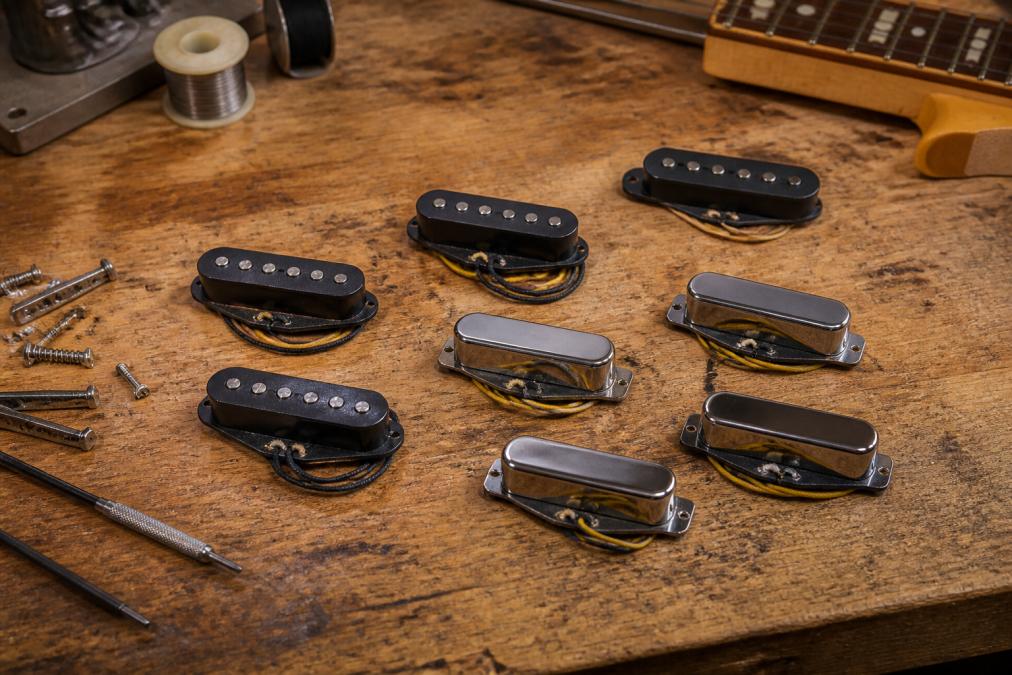
Haynes Golden Root Blackguard Pickups
The Haynes Golden Root Blackguard Pickups (£110.00 per set) deliver authentic 1950s Blackguard tone without original instruments' fragility. Scatter wound using formvar-coated wire and vintage-spec Alnico magnets, the set excels for players seeking clarity without harshness, with sharp string definition and organic overall tone.
Best for: Players building partscasters or upgrading existing instruments prioritizing vintage authenticity and tonal refinement.
Standout feature: Hand-tested through vintage amplification before dispatch.
Haynes Golden Root House Special '60s Pickups
At £110.00, the Haynes House Special '60s set targets players seeking slightly hotter output than vintage Blackguard specs whilst maintaining classic Telecaster character. Using slightly heavier wire gauge and partial lacquer potting, these pickups increase output and add subtle compression suiting overdriven tones without sacrificing clean articulation.
Best for: Players upgrading instruments or building partscasters wanting classic Telecaster tone with enough output for modern effects and amplifiers.
Standout feature: Optimized output and compression characteristics suit overdriven tones whilst maintaining clean clarity.
Radioshop Pickups 'ID:Telecaster' Set
Radioshop's 'ID:Telecaster' set (£240.00) prioritizes dynamics and clarity through proprietary potting methodology. Bridge pickup uses 42 AWG wire; neck uses 43 AWG. Both employ vintage-staggered Alnico 5 magnets. What you hear is enhanced string definition and presence without harshness. Radioshop offers customization: nickel, chrome, or gold neck pickup covers, and RWRP neck pickups for hum-cancelling in three-pickup configurations. Build time runs 10-15 working days.
Best for: Players prioritizing articulation and clarity, particularly those using single-coil-friendly amplifiers.
Standout feature: Proprietary "Increased Dynamics" potting process enhances clarity and presence.
Mojo Pickups '52 Telecaster Set
Mojo Pickups' '52 set (£190.00) targets players chasing authentic mid-1950s tone with modern hand winding reliability. Scatter wound to vintage specification using 42 AWG bridge and 43 AWG neck wire, these pickups match original Broadcaster and early Telecaster specs. Non-staggered Alnico 5 magnets and copper-plated baseplate complete the vintage formula. Build time runs 30-35 days.
Best for: Vintage enthusiasts and players building historically accurate partscasters. Excellent for traditional country, rockabilly, and blues.
Standout feature: Authentic 1950s specifications and hand-scatter-wound construction.
Bare Knuckle Pickups Blackguard Tele Series
Bare Knuckle's Blackguard Tele Series (approximately £260 per set) represents premium UK hand wound pickups for telecaster. Using 43 AWG plain enamel wire on both bridge and neck, scatter wound to exacting specifications, the Blackguard series delivers articulation without aggression, with sharp string definition and organic overall tone.
Best for: Professional musicians, serious hobbyists, and players building high-end partscasters. Suitable for all playing styles.
Standout feature: Meticulous construction and exhaustive listening tests ensure consistency and tonal refinement.
How to Install Telecaster Pickups: A Practical Guide
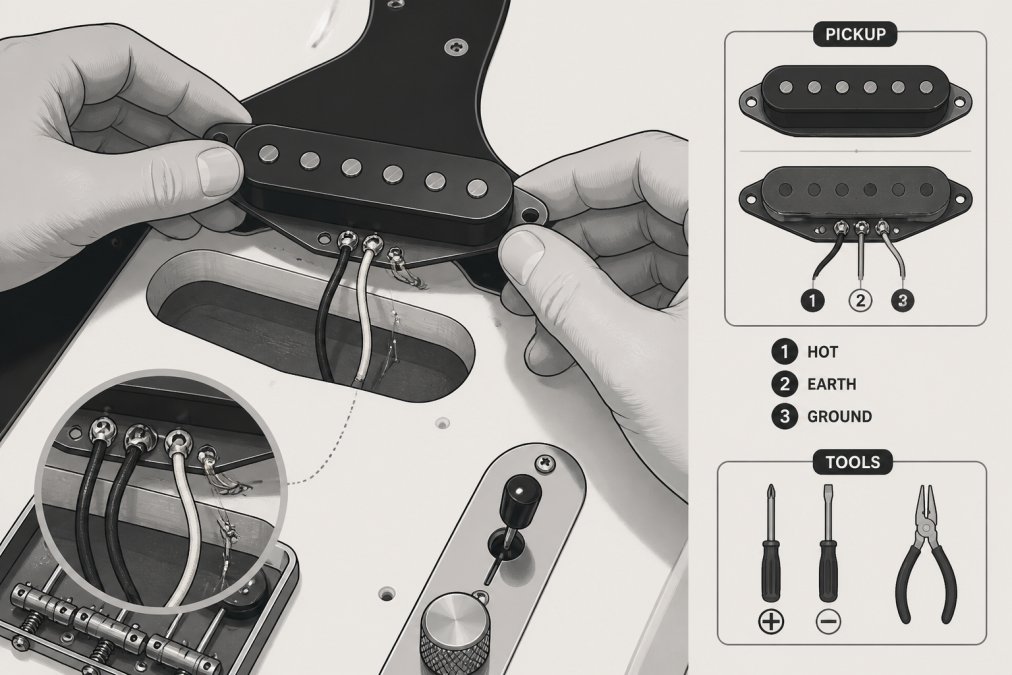
Installing hand wound pickups for telecaster is straightforward. Most players complete the job in under an hour.
What You'll Need
Gather these tools: soldering iron (25-40 watts), rosin-core solder, desoldering wick or solder sucker, small screwdrivers, wire strippers, multimeter, masking tape, pickup height gauge or ruler, and new pickups. Hand wound pickups typically arrive with colour-coded wires: red (hot), black (ground), and sometimes shield wire.
Step-by-Step Installation Process
Step 1: Remove strings and pickguard. Loosen tuning pegs until strings go slack, remove them entirely. Unscrew pickguard mounting screws and lift gently away.
Step 2: Photograph existing wiring. Take clear photos of current pickup wiring before touching anything, paying special attention to hot and ground wire connections.
Step 3: Desolder old pickup wires. Heat each solder joint for 2-3 seconds, then apply desoldering wick or solder sucker. Work methodically to avoid damaging pot connections.
Step 4: Remove old pickups. Once wires are desoldered, pickups lift free. Note positioning; height and angle affect tone.
Step 5: Install new pickups. Position each new pickup in the cavity, matching original height and angle. Use a pickup height gauge or ruler for consistency. Secure using original mounting springs and screws without over-tightening.
Step 6: Solder new pickup wires. Heat the pot lug for 2-3 seconds, apply fresh solder, then touch the pickup wire to the joint. Solder should flow smoothly, creating a shiny, cone-shaped connection.
Step 7: Test continuity. Use your multimeter to test each pickup's continuity between hot and ground wires. You should see 5k-10k ohms depending on the pickup.
Step 8: Reassemble. Reinstall the pickguard, restring the guitar, and tune to pitch. Let the neck settle 30 minutes before final tuning.
Common Installation Mistakes to Avoid
Over-tightening mounting screws reduces vibration isolation and deadens tone. Reversed hot and ground wires cause thin, weak tone. Cold solder joints are unreliable and require reheating. Incorrect pickup height affects tone significantly, Telecaster pickups typically sit 2.0-2.5 mm from strings at treble side. Forgetting to test before reassembly means disassembling again if problems arise.
Tone Characteristics: Twang, Chime, and Bite Explained
Hand wound pickups for telecaster produce three distinctive tonal characteristics: twang, chime, and bite.
Twang is the percussive attack when you strike a string, enhanced by scatter wound construction preventing magnetic field damping of initial string vibration. Chime is the harmonic resonance sustaining after initial attack, the bell-like quality making Telecasters sound bright. Scatter wound construction creates wider, less pronounced resonance peaks, distributing harmonic content across broader frequency ranges. Bite is aggressive midrange presence cutting through mixes, coming from pickup output and emphasis between 2k-5k Hz.
The balance between these characteristics depends on magnet type, wire gauge, potting method, and coil geometry. Vintage-spec pickups emphasize twang and chime with moderate bite. Modern hand wound pickups often increase bite through higher output specifications, appealing to overdriven tones or high-gain effects.
Maintenance and Longevity of Hand Wound Pickups
Hand wound pickups for telecaster are remarkably durable with proper care. The primary threat is moisture. If your guitar sits in damp environments, coils absorb moisture, increasing resistance and degrading tone. Prevent this by storing instruments in climate-controlled environments (40-60% relative humidity).
Solder joints are the second vulnerability. Frequent transport or vibration can crack joints or develop cold connections, causing intermittent noise or signal loss. If you notice crackling or dropouts, desolder and resolder affected connections. Potting integrity matters for high-gain situations. If pickups develop microphonic feedback, potting may have cracked, this is rare in hand wound pickups for telecaster.
Magnets don't degrade. Alnico magnets remain stable across decades. Avoid dropping pickups and never store near heat sources or direct sunlight.
Choosing hand wound pickups for telecaster balances authenticity, output, and playing context. Haynes Golden Root Blackguard Pickups (£110.00 per set) deliver the benchmark, genuine 1950s tone with modern reliability. For articulation and presence, Radioshop's 'ID:Telecaster' set (£240.00) offers enhanced dynamics. For vintage enthusiasts, Mojo Pickups' '52 set (£190.00) captures authentic mid-1950s specifications. For premium construction, Bare Knuckle's Blackguard series (approximately £260) delivers meticulous refinement.

Installation is straightforward; most players complete it in under an hour. Test solder joints before reassembling, maintain proper pickup height, and avoid over-tightening mounting screws. With basic care, hand wound pickups for telecaster will outlast your instrument.
Get started with Haynes Guitar & Bass Build and experience how hand wound pickups for telecaster transform your instrument's tone. Our Blackguard and House Special '60s sets are hand-tested through vintage amplification, ensuring every set delivers clarity, warmth, and dynamic response defining authentic Telecaster character.
Frequently Asked Questions
Are hand wound pickups actually better than machine-wound ones?
Hand wound pickups offer greater control over coil geometry, wire tension, and magnet positioning, which can produce more consistent harmonic content and reduced microphonic feedback. Machine-wound pickups prioritise speed and cost efficiency. For Telecasters specifically, hand wound versions typically deliver superior string definition and tonal clarity, though the difference becomes more pronounced at higher volumes and with effects. Quality of components, wire gauge, magnet type, potting method, matters as much as the winding process itself.
What is the difference between scatter wound and machine-wound Telecaster pickups?
Scatter wound pickups have wire distributed randomly across the bobbin, creating varied coil density and magnetic field interaction. This produces a more organic frequency response with enhanced treble response and dynamic sensitivity. Machine-wound pickups follow a uniform, precise pattern that optimises consistency but can sound thinner or more sterile. Scatter wound pickups, particularly those using formvar or enamel-coated copper wire, tend to capture the vintage character Telecaster players seek, especially when combined with alnico magnets and proper potting methods.
Should I choose alnico or ceramic magnets for my Telecaster pickups?
Alnico magnets (typically Alnico II or V in Telecasters) deliver warmer, more articulate tones with natural harmonic richness and greater string definition. Alnico V produces higher output and slightly more aggression than Alnico II. Ceramic magnets offer higher output and brighter response but can sound harsher and less musical in single-coil applications. For hand wound Telecaster pickups, alnico magnets are the standard choice because they complement the scatter wound construction and deliver the chime and bite characteristic of vintage Telecasters. Ceramic magnets are rarely found in boutique hand wound sets.
How long does a custom hand wound Telecaster pickup set typically take to build?
UK-based hand wound pickup makers typically require 10 to 35 working days from order to dispatch, depending on the maker and customisation level. Radioshop offers 10-15 working days, whilst Mojo Pickups requires 30-35 days as they build to order. Haynes Guitar & Bass Build provides bespoke consultation for custom voicing and specifications. Lead times reflect the labour-intensive nature of hand winding, magnet selection, potting, and quality testing. Expedited options may be available; contact makers directly for urgent builds.
Will upgrading to hand wound pickups improve my Telecaster's sustain?
Hand wound pickups improve sustain indirectly by enhancing magnetic field strength and reducing microphonic feedback, which allows notes to ring more clearly. The real sustain gain comes from the instrument's construction, neck pocket fit, body mass, bridge quality, rather than the pickup alone. What hand wound pickups do deliver is greater dynamic sensitivity and harmonic content, making sustain that does exist sound richer and more defined. Potting methods (wax vs. lacquer) also affect feedback control, with fully potted pickups offering the most sustain-friendly response at high gain.
This article was written using GrandRanker