

5 Best Pickups for Classic Rock Tone
Table of Contents
- What Defines Classic Rock Tone in a Pickup
- Guitar Pickup Output Explained: Why It Matters
- 1. Haynes Golden Root 1957 Stratocaster Pickup Set
- 2. Bare Knuckle The Mule: Authentic PAF Style Pickups UK
- 3. Seymour Duncan JB Humbucker for High-Gain Rock
- 4. Haynes Golden Root P90 Classic: Raw Rock Character
- 5. Gibson Burstbucker: Vintage PAF Authority
- How to Install Guitar Pickups: A Practical Overview
Last Updated: August 7, 2026
What Defines Classic Rock Tone in a Pickup
Classic rock tone balances warmth, sustain, and articulation in ways that respond to both clean and overdriven amplification. What separates a great classic rock pickup from a mediocre one is how it handles the midrange, the frequencies that carry vocal-like presence and cut through a mix without harshness.
The magic happens in the interaction between magnet type, coil winding, and DC resistance. Classic rock demands pickups that sit in a sweet spot: roughly 7,000 to 10,000 ohms of resistance for humbuckers, or 5,500 to 6,500 for single-coils, where they retain touch sensitivity while delivering enough signal to colour the amp's natural breakup.
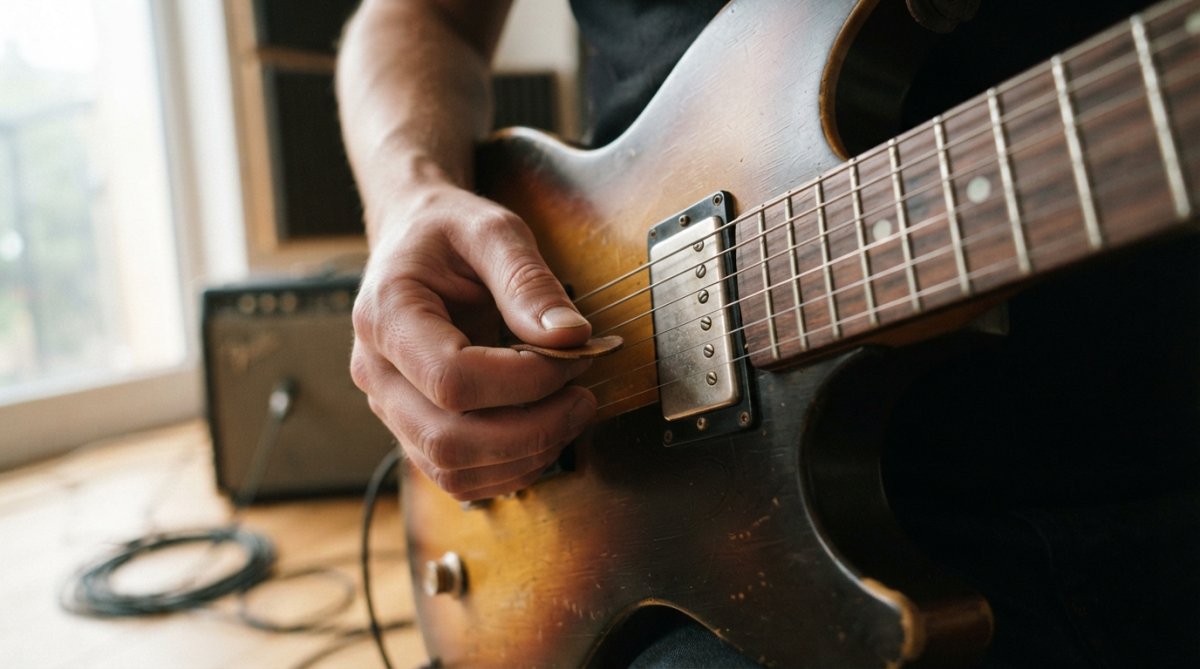
At Haynes Guitar & Bass Build, we've spent years hand-winding pickups that capture this balance. The research into what made 1950s and 1960s pickups legendary revealed a simple truth: consistency in materials and winding technique matters more than chasing exotic specifications. The classic rock sound thrives on restraint.
Humbucker vs. Single-Coil for Classic Rock
Humbuckers dominate classic rock because they reject electromagnetic hum while delivering the midrange presence that defines the genre. A humbucker's dual-coil design creates a thicker, more compressed tone with natural sustain.
Single-coils offer clarity and articulation that humbuckers can't match, excelling in clean tones with brighter, more transparent response. However, they're susceptible to hum and require careful amplifier pairing to avoid sounding thin at high gain. For classic rock, single-coils work best in Stratocaster configurations where switching allows blending positions for tonal variety.
The choice comes down to your amplifier and playing style. If you're driving a tube amp into natural overdrive and want warm, vocal-like sustain, choose a humbucker. If you prioritise articulation and play in a quieter environment, single-coils deliver superior touch response.
Output Levels and DC Resistance Explained
DC resistance measures the total electrical resistance of a pickup's coil windings, expressed in kilohms (kΩ). A pickup with 8,000 kΩ resistance behaves fundamentally differently from one with 12,000 kΩ, the higher-resistance pickup produces more output, compresses dynamics slightly, and emphasises midrange frequencies.
Classic rock pickups typically sit between 7,000 and 10,000 kΩ for humbuckers, delivering enough signal to push a tube amp into natural overdrive without sacrificing dynamic response. Many modern pickups exceed 11,000 kΩ, which can sound impressive through a clean amp but loses definition when overdriven. Understanding output matters because it determines how your pickup interacts with your amplifier's input stage.
Guitar Pickup Output Explained: Why It Matters
Output level directly affects how hard your pickup drives the amplifier's input stage, controlling how early the amp begins to distort or compress the signal. A 7,000 kΩ pickup produces roughly half the voltage of a 12,000 kΩ pickup under the same string vibration.
Many players chase high-output pickups thinking more signal equals better tone. In practice, excessively high output compresses dynamics, reduces touch sensitivity, and can make clean tones sound muddy. The relationship between pickup output and amplifier design is crucial, a vintage-voiced amplifier with lower headroom responds differently to pickup output than a modern amp with high headroom.
Alnico II vs. Alnico V Magnets
Alnico magnets are alloys of aluminium, nickel, and cobalt that define how a pickup's magnetic field shapes tone. The two most common types in classic rock pickups are Alnico II and Alnico V.
Alnico II magnets create a softer, more permeable magnetic field that responds sensitively to playing dynamics. Pickups with Alnico II magnets produce a warmer, more open tone with emphasis on the lower midrange, excelling at revealing subtle variations in playing technique. Alnico II became the standard in vintage Gibson humbuckers because it delivered the dynamic, expressive tone that made those instruments legendary.
Alnico V magnets generate a stronger magnetic field that produces higher output and emphasises the upper midrange. Pickups with Alnico V magnets sound more aggressive, with faster transient response and enhanced sustain, better suited to high-gain applications.
For classic rock, Alnico II remains the superior choice if you prioritise warmth, dynamics, and vintage character. Alnico V works better if you need higher output or enhanced upper-midrange presence.
Bridge vs. Neck Pickup Positioning
Bridge pickups sit closer to the bridge saddle, where string vibration is smallest and highest in frequency content, producing a brighter, more articulate tone with less bass response. Neck pickups sit closer to the neck, where string vibration is largest and lowest in frequency content, delivering a warmer, bassier tone with more sustain. In classic rock, the bridge pickup handles lead work and provides clarity, while the neck pickup delivers the warm, full tone for rhythm sections.
1. Haynes Golden Root 1957 Stratocaster Pickup Set
The Haynes Golden Root 1957 is our top recommendation for classic rock players seeking authentic, touch-responsive single-coil tone. Hand-wound in the UK using period-correct specifications, this set captures the clarity and articulation that defined 1950s Stratocaster recordings.
These pickups excel because they prioritise dynamic response over raw output. Each coil is wound to precise tolerances, and the Alnico V magnets deliver focused, articulate tone that cuts through without sounding thin. At £89.00 per set, they represent exceptional value for players building partscasters or upgrading existing instruments.
What works: The three-pickup configuration offers genuine tonal variety through switching. Wax-potted coils reduce microphonic feedback without deadening the tone.
What to watch: Single-coil pickups inherently produce some electromagnetic hum in electrically noisy environments. If recording in a studio with multiple monitors or playing near fluorescent lighting, this may require shielding or strategic cable routing.
Best for: Stratocaster players chasing authentic vintage tone, DIY builders seeking quality components at reasonable cost, and musicians who value articulation and touch sensitivity.
2. Bare Knuckle The Mule: Authentic PAF Style Pickups UK
The Bare Knuckle The Mule is a faithful late-1959 PAF reproduction hand-wound in the UK using vintage-correct materials and techniques. Bare Knuckle's meticulous approach, 42 AWG plain enamel wire, Alnico IV magnets, unpotted coils, results in a pickup that sounds like the originals that defined classic rock.
At £330.00 to £379.00 for a calibrated set, The Mule sits at the premium end of the market. This price reflects genuine hand-winding, high-quality materials, and the time required to voice each pickup correctly.
What works: The unpotted coils deliver an open, airy tone with exceptional dynamic range. Single-note articulation is outstanding, and the Alnico IV magnets provide a sweet midrange-forward character that balances warmth with clarity.
What to watch: Unpotted coils can be susceptible to microphonic feedback at very high gain settings. Lead times can extend to 8-12 weeks, so plan accordingly if you're building a guitar.
Best for: Tone purists, Les Paul players seeking authentic 1959 character, and musicians willing to wait for hand-wound pickups that deliver uncompromised vintage tone.

3. Seymour Duncan JB Humbucker for High-Gain Rock
The Seymour Duncan JB (SH-4) is a legendary high-output humbucker that bridges the gap between classic rock and modern hard rock. With approximately 15,000 kΩ resistance, it produces significantly more output than vintage-style pickups, making it ideal for players who drive their amps hard or use high-gain pedals.
The JB excels at delivering articulation even at extreme gain levels. Its strong upper midrange attack cuts through dense mixes, and the Alnico V magnets provide fast transient response and extended sustain. At £104.00 to £121.00 per pickup, it represents reasonable value for a workhorse humbucker used on countless professional recordings.
What works: The four-conductor wiring allows coil-splitting, giving you access to single-coil tones when needed. The pickup retains clarity even at high gain.
What to watch: The JB can sound bright or harsh through certain amplifier combinations. Many players pair it with 250K potentiometers instead of the standard 500K to smooth out the highs.
Best for: Hard rock and heavy blues players, musicians using high-gain amplifiers or pedals, and players seeking a pickup that maintains definition at extreme gain levels.
4. Haynes Golden Root P90 Classic: Raw Rock Character
The Haynes Golden Root P90 delivers the raw, vocal character that defined early rock and roll. Hand-wound in the UK, this pickup sits tonally between a single-coil's articulation and a humbucker's warmth, making it ideal for players seeking something different.
P90 pickups have larger coils than single-coils but lack the dual-coil hum-rejection of humbuckers. This design produces a tone thicker than a Stratocaster single-coil but more transparent than a Les Paul humbucker. At £115.00 per set, the Golden Root P90 offers genuine character at a mid-range price point.
What works: The P90 responds beautifully to playing dynamics and shines in both clean and overdriven contexts. It produces natural sustain without sounding compressed.
What to watch: P90 pickups are susceptible to electromagnetic hum in electrically noisy environments. Some players find the tone too thick for high-gain lead work, though this is largely a matter of preference.
Best for: Players seeking a distinctive, characterful tone, blues-rock musicians wanting something beyond standard humbucker voicing, and builders looking to create a unique instrument personality.
5. Gibson Burstbucker: Vintage PAF Authority
The Gibson Burstbucker series represents Gibson's official approach to recreating the legendary Patent Applied For (PAF) humbuckers from the late 1950s. Available in three types with varying output levels, these pickups deliver authentic vintage tone backed by Gibson's engineering and quality control.
The Burstbucker uses unmatched bobbin windings, a hallmark of vintage PAF construction, and Alnico II magnets that create the warm, dynamic character that made those original pickups legendary. At £121.00 to £151.00 per pickup, Burstbuckers sit in the mid-premium range.
What works: The different Burstbucker types allow you to match output levels to specific positions. The unpotted coils deliver the open, airy tone characteristic of original PAFs.
What to watch: Unpotted coils can produce microphonic feedback at very high gain. The lower output compared to modern high-output pickups means they respond best to tube amps with moderate headroom.
Best for: Gibson guitar owners seeking factory-correct vintage tone, classic rock players prioritising authenticity, and musicians who value Gibson's heritage and quality standards.

How to Install Guitar Pickups: A Practical Overview
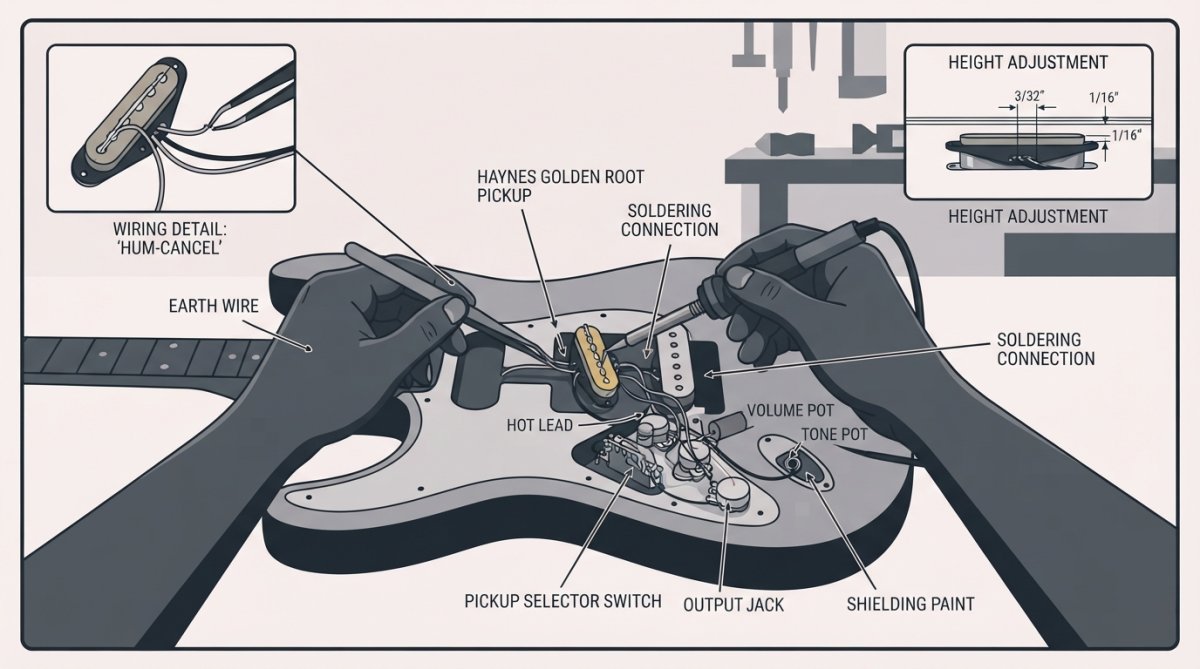
Installing pickups is straightforward if you approach it methodically. Most players can complete a pickup swap in 30 to 45 minutes with basic tools: a soldering iron, solder, wire strippers, and screwdrivers.
Start by removing the strings and pickguard. Take a photograph of the existing wiring before disconnecting anything. Desolder the pickup leads from the potentiometers carefully; excessive heat can damage the pots. Remove the old pickups, then position the new pickups in the same location. When soldering new pickups, use a temperature-controlled soldering iron set to approximately 350°C. Ensure connections are clean and shiny; dull, grainy solder indicates a cold joint that may cause intermittent noise or signal loss. Test your work by plugging in and checking that both pickups produce signal and that the switching works correctly.
Potentiometer and Capacitor Pairing for Tone Shaping
Potentiometers (volume and tone controls) and capacitors work together to shape how your pickups interact with your amplifier. The potentiometer value, typically 250K, 500K, or 1M ohms, affects the frequency response and how quickly high frequencies roll off when you turn down the tone control.
A 500K potentiometer is the standard pairing for most humbuckers and delivers balanced tone control response. A 250K potentiometer pairs better with high-output pickups, softening their brightness. A 1M potentiometer works well with lower-output vintage pickups, preserving maximum high-frequency content. The tone capacitor (typically 0.022 µF or 0.047 µF) determines how aggressively the tone control rolls off frequencies.
Pickup Height and Pole Piece Adjustment
Pickup height, the distance between the pickup and the strings, profoundly affects tone. Too close, and the magnetic field dampens string vibration, reducing sustain and creating a compressed tone. Too far away, and the pickup fails to capture the full signal, resulting in a thin, weak tone.
The standard starting point is approximately 2-3 mm from the high E string to the pickup pole pieces on the bass side, and slightly closer on the treble side. Many vintage pickups feature adjustable pole pieces that can be raised or lowered to balance output across strings. Spend time adjusting individual pole pieces to ensure even response across all six strings.
The best pickups for classic rock tone prioritise dynamic response over raw output, are voiced to emphasise the midrange frequencies that define the genre, and respond beautifully to both clean and overdriven amplification. Whether you choose authentic vintage reproductions like the Bare Knuckle The Mule or hand-wound UK alternatives like the Haynes Golden Root 1957 Stratocaster set, the goal remains the same: capturing the warmth, sustain, and articulation that made classic rock legendary.

Haynes Guitar & Bass Build hand-winds pickups specifically designed for players seeking bespoke tone. Our Golden Root series delivers the character and consistency that define professional-grade pickups, with the added advantage of UK-based craftsmanship and the ability to discuss your specific tonal goals before ordering.
Frequently Asked Questions
Are humbuckers or single-coils better for classic rock?
Humbuckers dominate classic rock because their dual-coil design delivers higher output, sustain, and reduced hum, essential for driving tube amps into overdrive. Single-coils work well for cleaner, jangly tones and blues-based rock, but humbuckers provide the thick, powerful midrange and harmonic richness that defines classic rock distortion. Your choice depends on whether you want warm, saturated tones (humbucker) or crisp, articulate clarity (single-coil).
What is the best pickup output level for classic rock?
Classic rock typically thrives with medium to high output pickups (7k-10k DC resistance). This range provides enough punch to saturate a tube amp's preamp without sacrificing articulation or dynamic response. Low-output PAF-style pickups (5k-7k) work beautifully for vintage blues-rock and clean tones, while very high-output pickups (11k+) suit hard rock and metal. Test your preferred output against your amp's gain structure, a lower-output pickup can sing through a cranked tube amp, while a high-output pickup may lose clarity through a solid-state amp.
What makes PAF-style pickups UK makers special for classic rock tone?
PAF (Patent Applied For) humbuckers from the late 1950s set the gold standard for classic rock tone: warm, articulate, with singing sustain and natural harmonic bloom. UK makers like Bare Knuckle and Haynes hand-wind pickups using vintage-correct specifications, Alnico II or IV magnets, plain enamel wire, and unpotted coils, recreating that vintage character. These pickups respond dynamically to your playing touch, offering clarity in clean passages and rich saturation when driven hard, making them ideal for players who value tone nuance over raw power.
Can I upgrade pickups on an existing guitar without professional help?
Yes, if you're comfortable with basic soldering and have the right tools. Pickup installation involves removing the old pickup, desoldering wires from the potentiometers, installing the new pickup, and resoldering connections. Many DIY builders start with single-pickup upgrades (like a bridge humbucker) to gain confidence. If you're uncertain about soldering or your guitar's wiring, a luthier can install pickups for £40-£100 labour. Haynes Guitar & Bass Build can advise on compatibility and installation if you're building a custom instrument.
This article was written using GrandRanker