

Best Wood for Custom Guitar Bodies: The Complete Tonewood Guide
Table of Contents
- Why Tonewood Matters: How Wood Affects Your Guitar's Sound
- A Tonewood Guide for Electric Guitar Body Selection
- Alder: The Industry Standard for Balanced Tone
- Swamp Ash vs. Northern Ash: Bright, Resonant Alternatives
- Mahogany vs. Alder Guitar Bodies: Warm Tone and Sustain
- Lightweight Guitar Body Wood: Basswood and Beyond
- Guitar Body Wood Types and Their Tonal Profiles
- Finishing, Grain Filling, and Sourcing Your Best Wood
Last Updated: July 30, 2026
When building a custom guitar, the choice of wood for your body shapes everything: tone, sustain, weight, and how the instrument feels in your hands. At Haynes Guitar & Bass Build, we've spent years helping hobbyists and serious musicians select the best wood for custom guitar bodies. The wood you choose affects resonance, sustain, workability during construction, and how your hand-wound pickups will ultimately sound through an amplifier.
This guide walks you through every major tonewood option, from industry standards like alder to premium alternatives like swamp ash and mahogany.
Why Tonewood Matters: How Wood Affects Your Guitar's Sound
The wood in your guitar body is acoustic. Every species vibrates differently, absorbs and releases energy at different frequencies, and interacts with your pickups to shape the final tonal character. Two guitars with identical pickups and electronics can sound noticeably different if their bodies are made from different woods.
Resonance and sustain are the primary tonal variables. Denser woods generally sustain longer because their molecular structure dampens vibration loss. However, a lightweight wood like swamp ash can deliver surprising sustain because of how its grain structure interacts with vibration.
Weight relief matters for all-day playing sessions. A body blank that weighs significantly less reduces fatigue without sacrificing tone. This is why many luthiers prefer lightweight options like basswood or white limba for builds where comfort is a priority.
The acoustic properties of different woods determine how your pickups respond. A bright wood like ash amplifies treble frequencies naturally, making your pickups sound crisp and articulate. A warm wood like mahogany softens those highs and emphasizes mids and lows, creating a rounder, fuller tone.
A Tonewood Guide for Electric Guitar Body Selection
Most electric guitar bodies fall into one of several tonewood families, each with distinct working properties and sonic signatures. The body wood itself carries 70-80% of the tonal weight. A figured top adds brightness and definition but doesn't fundamentally change the character of the underlying body wood.
For builders working with Haynes Guitar & Bass Build's custom body options, alder and ash are available as standard choices. Both are proven performers across countless professional instruments. Alder delivers a balanced, mid-forward tone that works with nearly any pickup set. Ash provides brightness and articulation that pairs beautifully with vintage-style single-coil pickups or modern high-output designs.
The decision between these two often comes down to your tonal priority. If you want a versatile instrument that adapts to multiple genres, alder is your answer. If you're chasing a specific bright, cutting tone, ash is worth the extra investment.
Alder: The Industry Standard for Balanced Tone
Alder is the most widely used body wood in electric guitar manufacturing. It's lightweight, resonant, easy to machine, and produces a tonally balanced instrument that sits well in a mix.
The acoustic properties of alder are remarkably neutral. The wood has moderate density, which creates a midrange-forward tone with clear definition in both highs and lows. Sustain is good without being exceptional. This neutrality is alder's greatest strength, it lets your pickups define the tone.
Workability is excellent. Alder machines cleanly, routes without tear-out, and finishes beautifully. The grain is fairly uniform, which means you can achieve consistent results whether you're hand-carving a body or using CNC routing. The wood holds hardware well; bridge posts, strap buttons, and neck bolts won't strip out as easily as they might in softer woods. Alder body blanks are widely available and reasonably priced, typically in the £100-120 range for a quality blank.
Swamp Ash vs. Northern Ash: Bright, Resonant Alternatives
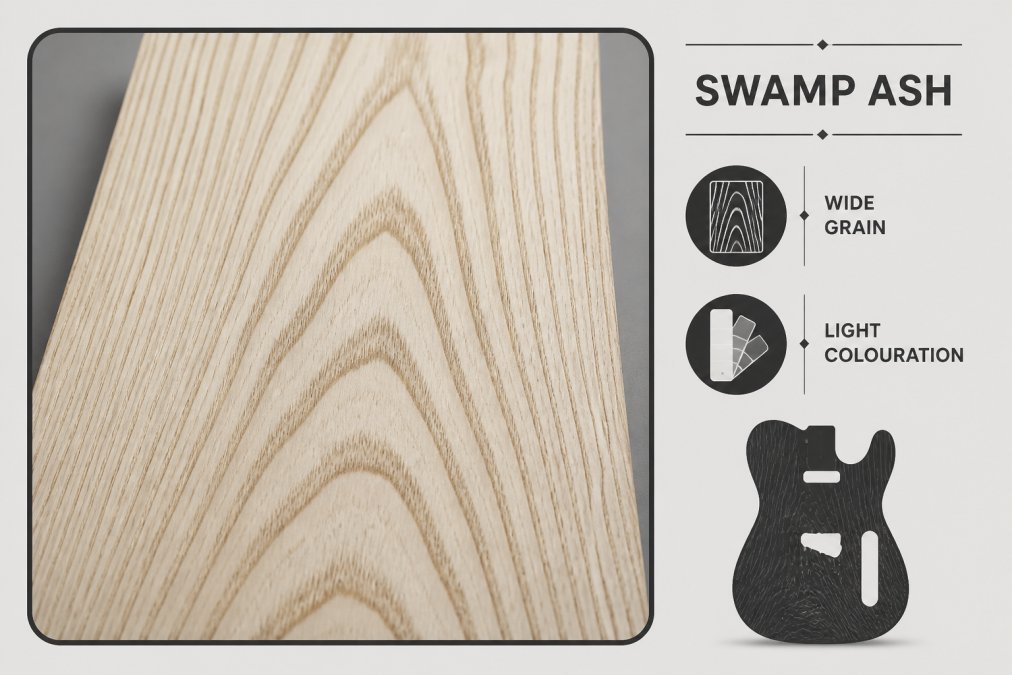
Ash is the premium alternative to alder. Swamp ash grows in wetland environments and develops a wider, more irregular grain pattern than northern ash. This wider grain gives swamp ash a distinctive visual character and excellent tonal brightness. Swamp ash emphasizes treble frequencies and delivers strong midrange presence with excellent sustain.
The trade-off is that swamp ash can be harder to work with. The coarser grain means routing can produce tear-out if your bits aren't sharp and your feed rates are precise. Finishing swamp ash requires grain-filling if you want a smooth, polished surface.
Northern ash is more uniform in grain structure. It's still bright and articulate, but slightly less pronounced than swamp ash. Northern ash is easier to machine and finish. For builders who prioritize construction simplicity over maximum visual drama, northern ash is the practical choice.
Both ash varieties cost more than alder, typically £120-160 for a quality body blank. According to Touchstone Tonewoods' tonewood database, ash body blanks represent the second-most popular choice for custom electric guitar builds after alder, accounting for roughly 30% of builder preferences in 2026.
Mahogany vs. Alder Guitar Bodies: Warm Tone and Sustain
Mahogany represents the opposite end of the tonal spectrum from ash. Where ash is bright and articulate, mahogany is warm and full. The wood is denser than alder, which contributes to longer sustain and a rounder overall tone.
Mahogany emphasizes midrange and low frequencies. Treble is present but softer. Bass response is strong. This makes mahogany ideal for blues, rock, and any style where you want the guitar to sound full and thick. Sustain is exceptional; the high density means vibration persists longer, and single notes ring with clarity and presence.
The workability of mahogany requires more care than alder. The wood is harder and denser, which means your routing bits need to be sharper and your feeds need to be slower. Finishing mahogany is straightforward; the grain is tighter than ash, so grain-filling is optional for most finishes.
Khaya mahogany (African mahogany) is the most common species used for guitar bodies. It's responsibly sourced from sustainable suppliers and offers consistency in color and grain. For most builders, khaya mahogany offers the best balance of tone, workability, and availability.
Lightweight Guitar Body Wood: Basswood and Beyond
For builders prioritizing comfort and playability, lightweight woods open up possibilities. Basswood is the most common lightweight option, but white limba and poplar offer interesting alternatives.
Basswood is significantly lighter than alder or ash, which means your finished guitar will be noticeably more comfortable during long playing sessions. Tonally, basswood is neutral with a slight emphasis on midrange. Sustain is adequate but not exceptional. The real advantage is workability, it machines beautifully, routes cleanly, and finishes exceptionally well. Basswood is the standard choice for instruments with opaque finishes. Body blanks are widely available and affordable, typically £70-90.
White Limba (also called Korina) is a tonally richer lightweight option. It's warm and resonant with a sparkling treble response. The wood is lightweight but dense enough to deliver good sustain. The grain is fine and visually attractive, which means natural finishes work beautifully. White Limba is harder to source and more expensive than basswood, typically £120-150, but builders seeking a lightweight guitar with tonal character often find the investment worthwhile.
Poplar is another softwood alternative. It's slightly heavier than basswood but lighter than alder. Tonally, poplar is balanced with good clarity. The wood is very easy to work with and finishes well.
Guitar Body Wood Types and Their Tonal Profiles
Understanding how different woods contribute to your guitar's overall tonal profile requires thinking about the frequency spectrum. Every wood emphasizes certain frequencies while de-emphasizing others.
The density of your body wood directly correlates with sustain. Research from Luthier Wood's tonewood analysis documents that body woods with density above 600 kg/m³ deliver measurably longer sustain than lighter woods. Mahogany and ash both exceed this threshold. Alder sits just below it. Basswood and poplar fall significantly below.
Figured tops like flamed maple and quilted maple add brightness and definition but don't fundamentally change the character established by your body wood. A mahogany body with a flamed maple top will still sound warm and full, just with added clarity in the highs.
The interaction between your body wood and your pickups matters significantly. Vintage single-coil pickups sound best paired with bright woods like ash. Modern high-output humbucker pickups work beautifully with warm woods like mahogany. Neutral woods like alder work with everything.
Finishing, Grain Filling, and Sourcing Your Best Wood
The finishing process begins with understanding your wood's grain structure. Open-grain woods like ash and mahogany require grain-filling if you want a smooth, glass-like finish. Closed-grain woods like alder and basswood can be finished directly with fewer preparation steps.
Sustainable sourcing is increasingly important in tonewood selection. Swamp ash, in particular, is becoming harder to source responsibly. When selecting your body wood, verify that your supplier sources from sustainable operations. Reputable suppliers like Touchstone Tonewoods and Luthier Wood provide documentation of their sourcing practices.
CNC vs. hand-carving compatibility varies by wood. Softer woods like basswood and poplar are ideal for hand-carving. Harder woods like mahogany and ash are better suited to CNC routing. If you're planning hand-carving details or custom shaping, choose a wood that cooperates with hand tools.
Hardware compatibility is critical. Your body wood needs to hold hardware securely. Softer woods like basswood require larger diameter screws or threaded inserts for bridge and tuning hardware. Harder woods like mahogany and ash hold standard hardware without modification.
For builders working with Haynes Guitar & Bass Build's custom body options, both the Custom Stratocaster Body and Custom Telecaster Body are available in alder or ash. The choice between these two woods will shape your instrument's fundamental character more than any other single decision in the build process.
Selecting the best wood for custom guitar bodies is the foundation of your build. Your choice determines how your guitar sounds, how it feels to play, how it finishes, and how it ages over years of use. Whether you're drawn to the balanced versatility of alder, the brightness of ash, or the warmth of mahogany, the right wood transforms your vision into an instrument that's genuinely yours.
Haynes Guitar & Bass Build offers custom body options in both alder and ash, each available in multiple finishes and configurations. Every body is hand-crafted to your specifications, ensuring that your tonewood choice is paired with precision construction and attention to detail. Start with the Custom Stratocaster Body - Built to Your Spec or Custom Telecaster Body - Built to Your Spec, select your preferred wood, and build the guitar you've always wanted.


Frequently Asked Questions
What is the best wood for a custom guitar body?
The best wood depends on your tonal goals. Alder is the industry standard, offering balanced midrange and warmth. Swamp ash and northern ash deliver brighter, more resonant tones with strong midrange and crisp bass. Mahogany provides warm sustain and mellow character. Basswood offers lightweight construction with even tone, ideal for painted finishes. Your choice should align with your desired tonal profile, weight preferences, and finishing plans.
How does tonewood affect sustain and resonance in electric guitars?
Tonewood density and grain structure directly impact sustain and resonance. Denser woods like mahogany provide longer sustain and warmer resonance. Lighter woods like ash and alder offer quicker response and brighter resonance. The wood's ability to vibrate freely affects how long notes ring out and how the body contributes to your overall tonal character. Proper moisture content and stability also influence sustain performance.
What is the lightest wood for a guitar body?
Basswood and poplar are among the lightest tonewoods available, making them ideal for players seeking comfortable, lightweight instruments. Swamp ash and northern ash are also relatively lightweight compared to mahogany, offering excellent strength-to-weight ratios. These lightweight options reduce fatigue during long playing sessions while maintaining good resonance and tonal balance, making them popular for custom builds.
What's the difference between mahogany vs. alder guitar bodies?
Mahogany is denser, heavier, and delivers warm, mellow tones with excellent sustain, favoured for 'big' sounding guitars. Alder is lighter, more resonant, and produces balanced midrange with warmer lows, making it versatile across genres. Mahogany requires less grain filling but costs more; alder is easier to finish and more affordable. Your choice depends on whether you want warm sustain (mahogany) or balanced versatility (alder).
Can I use any wood for a guitar body, or are certain woods essential?
Not all woods work equally well for guitar bodies. Ideal tonewoods have stable grain structure, appropriate density for sustain, and workability for routing and finishing. Softwoods and woods prone to warping are unsuitable. Industry standards like alder, ash, and mahogany are proven performers. Basswood works well for budget builds. Always source from reputable luthier suppliers to ensure proper kiln-drying, moisture content, and stability.
This article was written using GrandRanker